

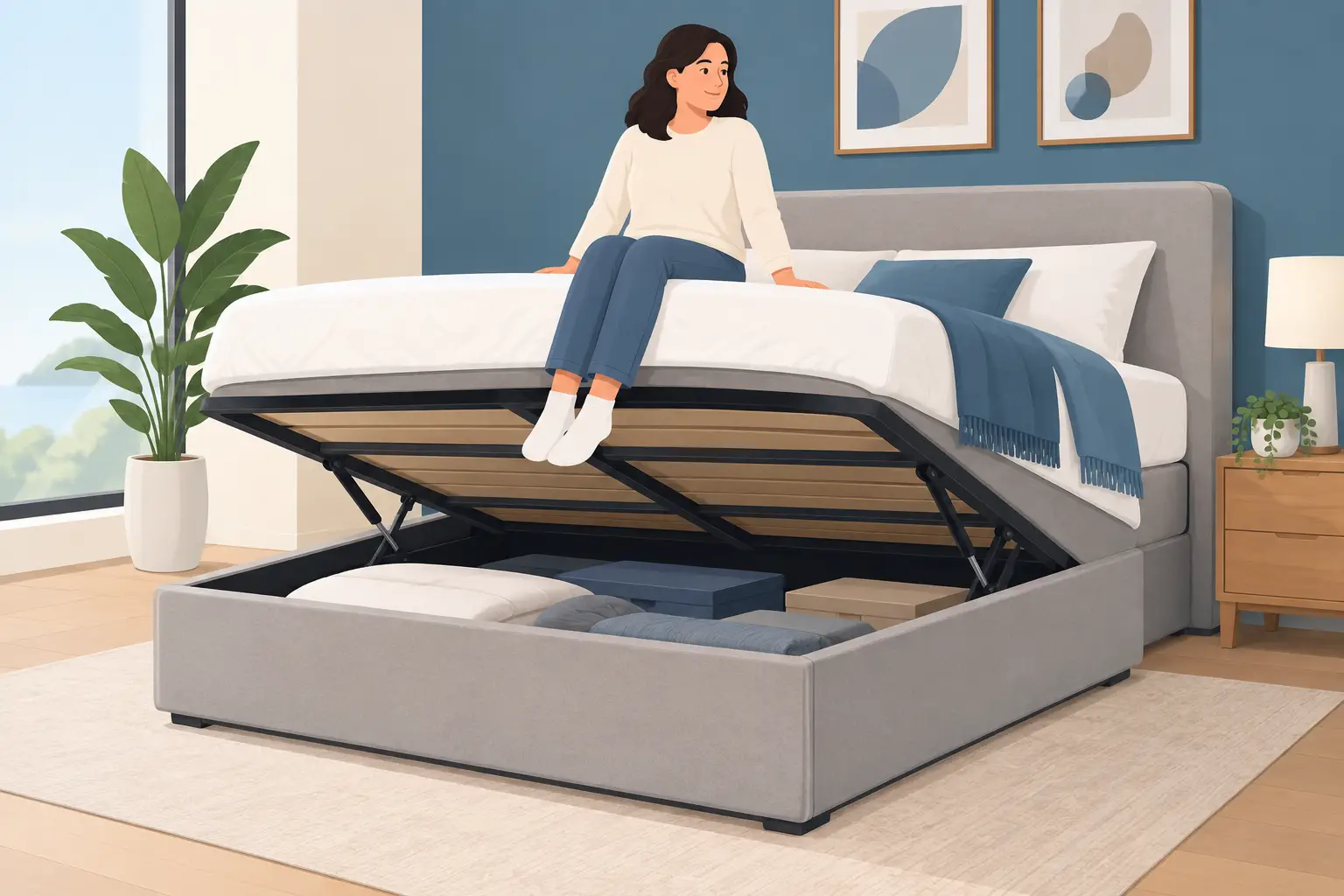
A bed is expected to do more than look good. It needs to support a mattress, two sleepers, bedtime reading, children climbing on for a cuddle and the occasional pile of clean washing waiting to be put away. So, can ottoman beds hold weight? Yes – a well-made ottoman bed is designed to carry the combined weight of its mattress and the people using it every day. The key is choosing the right size, frame construction and lifting mechanism, then using the storage base as intended.
Ottoman beds are not simply a standard bed with a storage box underneath. Their base, hinges and gas-lift struts work together to create practical under-bed storage while continuing to support the sleeping surface. That means the quality of each part matters, particularly if the bed will be used by a couple, in a family home or in a rental property.
Can ottoman beds hold weight safely?
A properly specified ottoman bed should comfortably support normal sleeping use. The mattress rests on either a solid platform top or a slatted frame, which is supported by the bed base and central structure. When the bed is closed, the weight is distributed across the frame rather than being held solely by the gas-lift arms.
The gas struts have a different job. They assist with lifting the mattress platform so you can reach the storage area without heavy manual lifting. They are selected to suit a particular mattress weight range. If the mattress is much heavier or lighter than the mechanism is designed for, opening and closing can become difficult. A bed may feel hard to lift with an overly heavy mattress, while an unusually light one can cause the platform to rise too quickly.
It is also worth separating everyday body weight from concentrated force. Sleeping, sitting briefly on the bed and getting in and out are all normal uses. Standing, jumping or dropping heavy items onto one small section of the frame puts far more pressure on the base, slats and fittings than they are intended to take.
What determines how much weight an ottoman bed can take?
There is no single weight figure that applies to every ottoman bed. Capacity depends on the bed’s materials, size and design. A good quality frame with dependable fittings will naturally provide more reassurance than a lightweight, poorly constructed alternative.
The bed frame and base construction
The frame does most of the structural work when the ottoman is shut. Strong side rails, a secure headboard connection, solid base panels and well-fitted corners help prevent movement over time. On larger beds, centre rails and extra support points are especially useful because they spread the load across a wider area.
Upholstered ottoman beds can offer a smart, softer look without compromising practicality, provided the internal structure is made for regular use. The fabric finish is not the measure of strength – ask about the base design, support arrangement and hardware rather than judging the bed by upholstery alone.
The mattress weight
A mattress is a permanent part of the load the bed carries. Deep pocket-sprung and memory foam mattresses can be considerably heavier than basic open-coil designs, especially in king size and super king size. That does not make them unsuitable for an ottoman bed, but it does mean the lift mechanism must be matched correctly.
Before ordering, check the recommended mattress weight for the particular ottoman base. This is particularly helpful when buying a made-to-order bed or replacing an existing mattress. The best arrangement is one where the mattress feels supported when you sleep and manageable when you open the storage compartment.
Bed size and number of sleepers
A small single ottoman bed used by one person has very different demands from a super king bed shared by two adults. Larger beds usually need more substantial internal support and lifting hardware because both the mattress and expected sleeping load increase.
For a guest room or child’s bedroom, a single or small double ottoman can be an excellent way to gain storage without adding another piece of furniture. In a main bedroom, a double, king size or super king option should be chosen with day-to-day occupancy in mind, not just the dimensions of the room.
How the storage area is loaded
The storage compartment is designed for household belongings such as bedding, spare duvets, pillows, seasonal clothing and folded linen. These are ideal items because they are bulky but relatively light. They also make use of space that would otherwise sit empty beneath the mattress.
Avoid treating the storage area as a place for very dense or awkward loads. Boxes full of books, gym weights, heavy tools or stacked electrical items can make the base harder to operate and may strain the lifting action. If the storage space becomes difficult to raise or lower, remove some weight and distribute the remaining contents more evenly.
Are side-lift and end-lift ottoman beds equally strong?
Both side-opening and end-opening ottoman beds can be suitable for daily use. The better choice is usually about room layout and access rather than strength alone. An end-opening bed lifts from the foot of the bed, making it useful where the sides are close to walls or bedroom furniture. A side-lift design is often practical in narrow rooms where access at the foot is restricted.
Whichever opening direction you choose, leave enough clear space to open the platform fully. Trying to lift it around bedside tables, a chest of drawers or piled belongings can place unnecessary pressure on the mechanism and make a simple job frustrating.
Using an ottoman bed without putting it under strain
An ottoman bed needs very little day-to-day maintenance, but a few sensible habits will help it continue working properly. Lift the bed using the handle or intended opening point, rather than pulling at the mattress or fabric edge. Keep fingers, children and pets clear while the base is moving, and make sure the platform is fully lowered before sitting or lying on it.
Do not overload one side of the storage space. Even distribution helps the platform sit correctly and prevents bulky contents from catching as it closes. If you store spare bedding in vacuum bags, check occasionally that nothing has shifted into the opening mechanism.
Periodically inspect visible bolts, hinges and brackets, particularly after a house move or if the bed begins to creak. A loose fitting is usually easier to address early than after it has caused repeated movement in the frame. If a gas strut loses its lifting assistance, do not force the bed open or attempt a makeshift repair – replacement parts need to be the correct type and strength for the bed.
When an ottoman bed may not be the best choice
Ottoman beds are a practical option for most bedrooms, but there are situations where another storage solution may suit better. If you need access to stored items several times a day, drawers or a wardrobe may be more convenient because you will not need to lift the mattress platform each time. Likewise, anyone who cannot comfortably handle a lifting base, even with gas assistance, may prefer a divan with drawers.
For most households, though, ottoman storage is ideal for items used less often: winter duvets, guest bedding, spare pillows and clothing between seasons. It offers a clean, organised result and can reduce the need for extra bedroom furniture – a real advantage in smaller homes and rented rooms.
At AAA Furniture UK Ltd, choosing an ottoman bed starts with the practical details: the room size, the mattress you plan to use, who will sleep on the bed and what you want to store underneath. Match those points to a well-built base and suitable lift mechanism, and you can enjoy useful storage without sacrificing everyday comfort or support.