

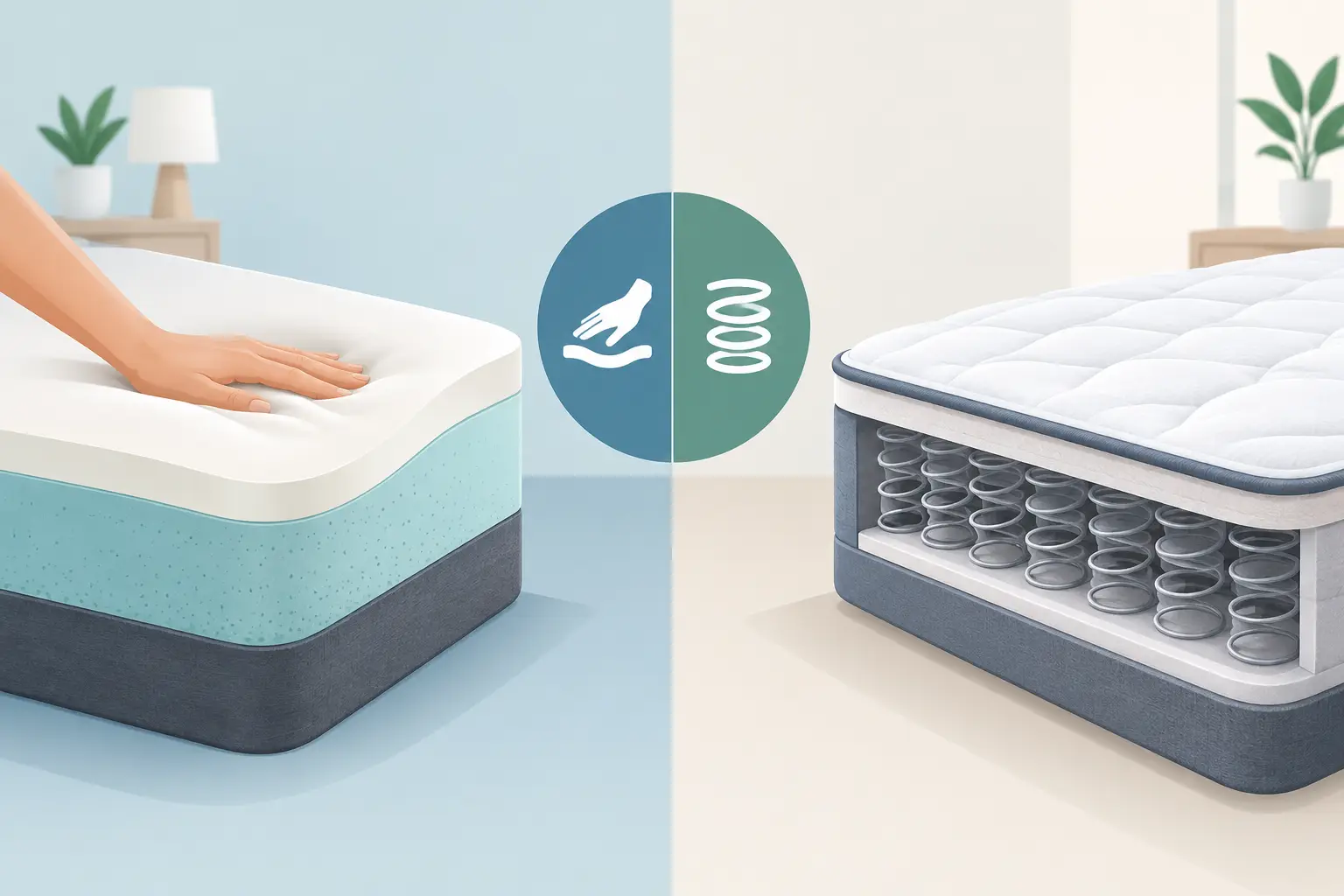
A memory foam versus spring mattress decision is not just about whether a bed feels soft or firm in the showroom. It affects how warm you feel at night, how much movement you notice from a partner and how well the mattress suits your preferred sleeping position. The right choice should also work with your bed frame, your budget and the way you use the bedroom.
For many households, a spring mattress is a familiar, affordable option with a more responsive feel. Memory foam is chosen for close body-contouring comfort and pressure relief. Neither is automatically better. The practical answer depends on what you need from your sleep surface.
Memory Foam Versus Spring Mattress: The Main Difference
A memory foam mattress uses layers of foam that react to body heat and pressure. As you settle down, the surface gradually moulds around your shoulders, hips and legs. This creates a cradling sensation and spreads body weight across a wider area.
A spring mattress contains an internal spring unit, topped with comfort fillings such as foam, fibre or fabric. The springs compress under pressure and bounce back quickly when you move. This gives a more lifted, responsive feel, rather than the close contouring of memory foam.
There are different types within both categories. Pocket-sprung mattresses have individually wrapped springs that can move more independently, while open-coil designs use linked springs and are often more budget-friendly. Memory foam mattresses may be all-foam, or they may pair foam comfort layers with pocket springs. That means shoppers do not always have to choose one material alone.
Comfort and Support for Different Sleepers
The best mattress comfort is personal, but your sleeping position provides a useful starting point. Side sleepers often prefer the pressure-relieving feel of memory foam. When the mattress has the right firmness, it can cushion the shoulder and hip rather than leaving those points under too much pressure.
Back sleepers generally need balanced support that helps keep the spine in a more natural position. A medium or medium-firm memory foam mattress can work well, as can a good-quality pocket-sprung mattress with supportive comfort layers. The key is to avoid a surface that lets the hips sink too far down.
Front sleepers commonly need a firmer, flatter feel. A spring mattress can be a sensible option because its responsive surface makes it easier to change position. A firmer memory foam model may suit some front sleepers, but a very soft one can feel restrictive and may not provide the level of support they need.
Body weight matters too. Heavier sleepers may find a firmer mattress more comfortable and durable, whether it uses foam or springs. Lighter sleepers can sometimes find a very firm spring unit unyielding, so a softer top layer or a gentler foam feel may be more suitable.
Motion Transfer for Couples
If one person gets up early or turns frequently at night, motion transfer can make a noticeable difference. Memory foam performs well here because it absorbs movement rather than sending it across the mattress. It is often a strong choice for couples with different routines or light sleepers.
Traditional open-coil spring mattresses can transfer more movement, particularly when one sleeper changes position. Pocket springs improve this because each spring works more independently. A pocket-sprung mattress with a foam or fibre top can offer a useful middle ground: more movement control than a basic spring mattress, with a bouncier feel than full memory foam.
Temperature and Breathability
Warm sleepers should pay close attention to mattress construction. Memory foam can retain more warmth because it closely hugs the body and has a denser structure. Modern foam mattresses may include cooling gel, open-cell foam or breathable covers to help air circulate, but they can still feel warmer than a traditional spring design.
Spring mattresses naturally allow more airflow through the gaps around the springs. This can create a fresher sleeping surface, particularly in a warm bedroom or for people who often wake feeling overheated. A breathable mattress protector, cotton bedding and suitable room ventilation will also make a difference, whichever mattress you choose.
Do not assume every spring mattress sleeps cool or every memory foam mattress sleeps hot. Thick foam comfort layers on top of springs can retain warmth, while a well-designed cooling foam mattress may suit many warm sleepers. Check the materials and depth of the comfort layers, not only the product name.
Ease of Movement and Getting In and Out of Bed
A spring mattress reacts quickly when you move. It gives some bounce and makes it easier to roll over, sit on the edge or get out of bed. This can be useful for people who change position frequently, have reduced mobility or simply prefer not to feel as though they are sinking into the mattress.
Memory foam has a slower response. Many people enjoy the secure, cushioned feeling, but others find it takes more effort to turn or rise from the bed. Density, firmness and temperature affect this. A firmer memory foam mattress will usually feel easier to move around on than a deep, soft model.
This point matters when buying a bed for a guest room, rental property or household with a wide range of users. A medium-firm pocket-sprung mattress is often an easy, broadly appealing choice because it feels familiar and responsive.
Durability, Mattress Care and Value
A mattress should be chosen for long-term comfort, not only the lowest initial price. The lifespan of both memory foam and spring mattresses varies according to materials, build quality, weight load and care. A good mattress base also matters. Using a suitable supportive bed frame or divan base helps the mattress perform as intended.
Memory foam mattresses do not usually need turning in the same way as double-sided spring mattresses, although rotating them head-to-foot can support more even wear. Spring mattresses may be single-sided or double-sided, so always follow the care instructions for the individual model. If a mattress is designed to be turned, doing so regularly can extend its useful life.
For value-conscious buyers, open-coil spring mattresses are usually among the most affordable options. They can be a practical choice for a spare room, first flat or rental property where a simple, supportive mattress is needed. Pocket springs cost more but often provide better individual support and reduced partner disturbance.
Memory foam can offer excellent value when pressure relief and motion isolation are priorities. However, price alone does not tell you how comfortable it will be. Look at mattress depth, stated firmness, foam layers, spring count where relevant and the type of base you plan to use.
Choosing the Right Mattress for Your Bed
Before ordering, measure the available space and check the mattress size carefully. A double mattress may be popular for smaller rooms, but it can feel tight for two adults. If bedroom layout allows, a king size can provide more personal space and make a real difference to shared sleep.
The bed base should also be considered. Divan beds give a level, supportive platform and can be a practical match for both spring and memory foam mattresses. Ottoman storage beds offer valuable space for bedding, seasonal clothes or other items that would otherwise take up room in wardrobes and drawers. The mattress should be manageable enough to lift safely if you choose an ottoman base, especially if you expect to access the storage regularly.
For upholstered bed frames and sleigh beds, check that the base is suitable for the mattress type and that slats are correctly spaced and secure. A mattress that is too deep can also change the look and practicality of a headboard, so consider overall height rather than mattress comfort in isolation.
A Simple Way to Make the Final Choice
Choose memory foam if you want a body-hugging feel, strong pressure relief and less disturbance from a partner moving in the night. It is particularly worth considering for side sleepers and couples, provided you are comfortable with a less bouncy feel and have considered temperature regulation.
Choose a spring mattress if you prefer a responsive surface, easier movement and better natural airflow. It can be an especially practical option for warm sleepers, front sleepers and buyers looking for a familiar feel at an accessible price. Pocket springs are worth considering when you want more targeted support and less movement transfer.
If you like elements of both, a pocket-sprung mattress with memory foam comfort layers can be a sensible compromise. You get the responsive support of springs with a softer, more pressure-relieving top surface.
A mattress is one of the most used pieces of furniture in the home, so give comfort the same attention as bed style and storage. Think about how you sleep now, not the mattress you had years ago, and choose the feel that will make your bedroom more comfortable night after night.