

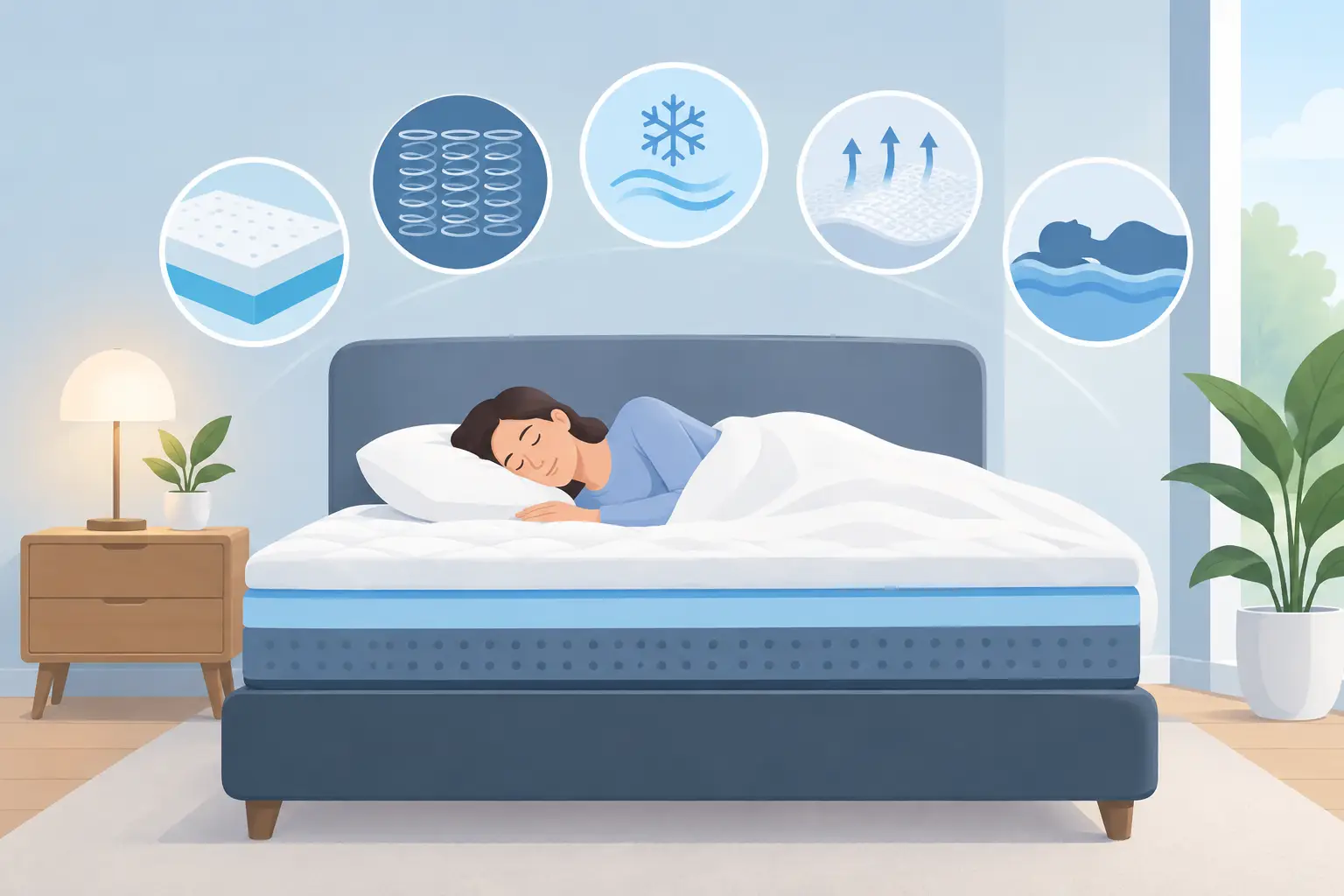
A mattress can look similar on the outside yet feel completely different after a week of sleep. That is where mattress technology matters. The springs, foam layers, fillings and edge construction beneath the cover affect pressure relief, temperature, movement and how well the mattress suits your preferred sleeping position.
For most shoppers, the goal is not to find the most complicated mattress. It is to choose one that gives reliable comfort, fits the bed properly and represents sensible value for the years ahead. Understanding the main mattress types makes that decision far easier, whether you are furnishing a first home, replacing an old bed or preparing a rental property.
How mattress technology affects everyday comfort
Mattress comfort is not just about whether a product is labelled soft, medium or firm. Those terms are useful starting points, but the construction decides how that comfort is delivered. A soft mattress may use a deep comfort layer that lets the body sink in slightly, while a firmer model may use denser fillings and stronger springs to keep the body more level.
The right feel depends on your body shape, weight and sleep position. Side sleepers often appreciate cushioning around the shoulders and hips. Back sleepers commonly need an even, supportive surface that stops the lower back from dipping. Front sleepers usually benefit from a firmer feel, as too much sink can place the neck and spine in an awkward position.
There is no single best mattress technology for every household. A couple may prioritise reduced movement when one person turns over. A warm sleeper may place cooling higher on the list. For a guest room or rental, durability, familiar comfort and straightforward value may matter more than highly specialised materials.
Spring systems: the foundation of many mattresses
Springs remain one of the most practical ways to create support and airflow in a mattress. They also suit a wide range of budgets, from dependable entry-level options to more refined pocket sprung designs.
Open coil springs
An open coil mattress uses a connected spring unit, with the springs linked together to form a single supportive system. This is a common choice for spare rooms, children’s bedrooms and properties where good value is the priority. The construction is generally firm and responsive, meaning you feel more on top of the mattress rather than deeply cushioned within it.
The trade-off is that movement can travel more easily across the surface. If one person gets in or out of bed, their partner may notice it more than they would on a pocket sprung mattress. Open coil models can still be a sensible, affordable choice when matched with suitable comfort fillings and a good-quality bed base.
Pocket springs
In a pocket sprung mattress, each spring sits within its own fabric pocket. Because the springs move independently, they can respond more closely to the body’s contours. This can provide more targeted support around heavier areas and reduce the feeling of movement travelling from one side of the bed to the other.
Pocket springs are especially useful for shared beds, including double, king size and super king size mattresses. They are also a strong all-round option for customers who want a balance of support and comfort without choosing a mattress that feels overly firm or overly soft.
A higher spring count is not automatically better. It can indicate a more detailed support system, but spring gauge, material quality, comfort layers and the mattress depth all influence the finished feel. It is better to consider the construction as a whole than to buy based on one number alone.
Foam layers and pressure relief
Foam comfort layers are often used over springs, but all-foam mattresses are also widely available. The type and density of foam can make a major difference to how the mattress feels.
Memory foam responds to body heat and pressure, gradually moulding around the body. Many people like the close, cushioned feel, particularly side sleepers who want gentler support around joints. It can also reduce motion transfer, which is useful where partners have different sleep schedules.
However, traditional memory foam may retain more warmth than a spring-led mattress, and some sleepers do not enjoy the slower response when changing position. Modern designs may use more breathable foam, open-cell structures or cooling fabrics to counter this, but a mattress should still be chosen on feel rather than cooling claims alone.
Reflex foam is generally more responsive and bouncier than memory foam. It offers supportive cushioning without the same deep contouring effect. This can suit people who prefer a firmer, more immediate feel and do not want to sink into the surface.
Hybrid mattresses combine springs with foam layers. This approach is popular because it can offer the airflow and responsive support of springs alongside the pressure relief of foam. The balance varies from model to model. A hybrid with thick memory foam layers can feel quite different from one with a thinner foam layer over firmer pocket springs.
Cooling materials: useful, but not magic
Warm nights can make even a comfortable bed feel unpleasant. Mattress technology aimed at cooling may include breathable covers, gel-infused foam, open-cell foam and spring systems that allow more air to circulate.
These features can help, especially compared with dense, traditional foam designs. Yet the bedroom itself also matters. A warm duvet, synthetic protector, poor ventilation or a heavily padded topper can reduce the benefit of a cooling mattress. If you sleep hot, look at the whole sleep setup rather than relying on one feature.
Natural fillings such as cotton, wool and cashmere can also help with moisture management, depending on the mattress design. Wool is valued for helping to regulate temperature across changing seasons, although mattresses with natural fillings can require more regular turning and may be priced differently from foam-led options.
Edge support and usable sleeping space
Edge support is easy to overlook in a showroom or online product description, but it affects how a bed performs every day. A reinforced perimeter helps the sides of the mattress feel more stable when sitting down to get dressed or when sleeping near the edge.
This is particularly worthwhile on smaller bed sizes, where every inch of sleeping space counts. It can also help people who find getting in and out of bed difficult. Edge support does not make a mattress firmer throughout, but it can make the entire surface feel more secure and usable.
Turning, rotating and choosing the right base
Not all mattresses should be cared for in the same way. Some are double-sided and designed to be turned regularly, allowing both sleeping surfaces to be used. Others are single-sided, with comfort layers placed on top, and should only be rotated head to toe. Following the care guidance can help the fillings settle evenly and maintain comfort.
The bed base also matters. A mattress needs stable, even support. Divan beds offer a practical, level foundation and can include useful drawer or ottoman storage for bedrooms short on space. Slatted bed frames need slats that are strong, evenly spaced and appropriate for the mattress type. A poorly supported mattress may not feel as intended and can wear unevenly over time.
When choosing a new mattress, measure the room as well as the bed. A king size may offer welcome space for couples, but a double can be the better fit if it leaves enough room to open wardrobes, access drawers and move around comfortably. For furnished rental homes, selecting standard sizes can also make future replacements simpler.
What to prioritise before you buy
Start with how the mattress will be used. For everyday use, choose support and durability over a fashionable label. For a guest bed, a medium feel is often a practical crowd-pleasing option. For couples, pocket springs, foam layers and edge support can all improve shared comfort.
Think about the full bed rather than the mattress in isolation. The right size, a dependable base and suitable storage can make a smaller bedroom work much harder. AAA Furniture UK Ltd offers beds and mattresses across practical sizes and styles, helping customers coordinate the main pieces of a bedroom without making the process more complicated than it needs to be.
A good mattress should make bedtime feel straightforward: enough support for your body, enough comfort for your preferred sleep position and a construction that suits your budget. Give yourself time to compare the materials behind the label, and choose the option you will be happy to sleep on night after night.