

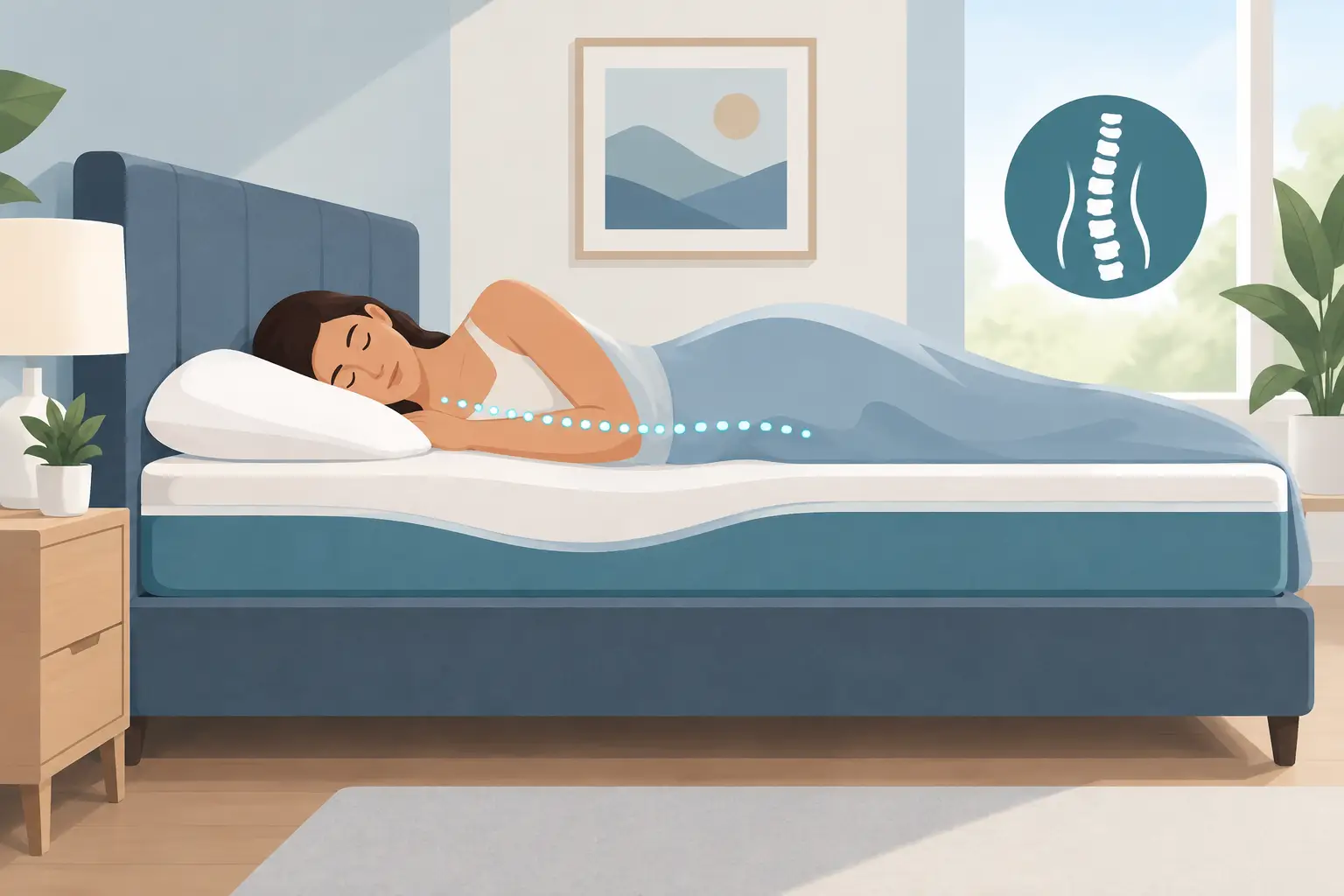
Waking up stiff, needing a few minutes before you can stand upright, or feeling worse after a full night in bed can make replacing your bed feel urgent. The best beds for back pain do not all look the same, because the right choice depends on your sleeping position, body weight, existing mattress and the level of support your body needs. What matters most is a stable, supportive sleep surface that keeps your spine in a comfortable, natural position.
A bed cannot diagnose or treat ongoing back pain. If pain is severe, follows an injury, causes numbness or weakness, or does not settle, speak to a healthcare professional. For everyday aches and poor sleep comfort, however, a well-chosen mattress and a dependable bed base can make a meaningful difference.
What makes a bed supportive for your back?
It is easy to focus on the bed frame, especially when choosing an upholstered design or a practical ottoman bed. Yet the mattress does most of the work when it comes to pressure relief and alignment. The frame and base still matter because they need to hold the mattress evenly, without sagging, bowing or allowing it to move around.
A supportive setup should do three things: keep your hips from dropping too far, cushion pressure around your shoulders and lower back, and provide an even surface across the whole bed. If the mattress is too soft, your pelvis may sink lower than your shoulders and put your spine out of line. If it is too firm, it can create pressure points and leave you tossing and turning.
The aim is not to buy the hardest mattress available. Firmness and support are related, but they are not the same thing. A quality medium-firm mattress can offer excellent support while still having enough comfort layers to feel welcoming at the end of the day.
Best beds for back pain: start with the mattress
For many UK shoppers, a medium-firm mattress is a sensible starting point. It tends to provide a balanced feel for a wide range of sleeping positions and body types. That said, personal comfort should decide the final choice.
Pocket sprung mattresses
Pocket springs work independently rather than as one connected unit. This can help the mattress respond to your shape, supporting areas such as the hips while reducing pressure at the shoulders. They are a strong option for couples too, as movement on one side is less likely to disturb the other person.
A pocket sprung mattress is often a practical choice when you want a traditional, breathable feel with structured support. The number of springs can be useful, but it should not be the only specification you compare. The quality of the fillings, depth of the mattress and overall build all affect comfort and durability.
Memory foam and hybrid mattresses
Memory foam moulds to the body and can feel particularly comfortable for sleepers who need pressure relief. Some people find all-foam mattresses warmer or slower to respond when changing position, so this is worth considering if you sleep hot or move frequently overnight.
Hybrid mattresses combine springs with foam or other comfort layers. They can offer the responsive support of pocket springs with added cushioning at the surface. For people who want a supportive mattress without an overly hard feel, this combination is often worth considering.
Orthopaedic-style mattresses
The term orthopaedic is widely used for firmer, supportive mattresses. It can be helpful as a guide to feel, but it is not a guarantee that one mattress will suit every back. Check the stated firmness, mattress construction and comfort layers rather than relying on the label alone.
A firmer orthopaedic-style mattress may suit a heavier sleeper or someone who feels their current bed lacks support. A lighter person may find the same mattress too unyielding, especially when sleeping on their side.
Choose firmness around how you sleep
Your usual sleep position is one of the clearest ways to narrow the choice. Back sleepers often benefit from medium-firm to firm support that holds the lower back and stops the hips sinking. Side sleepers commonly need a little more cushioning at the shoulder and hip, making a medium or medium-firm mattress more comfortable. Front sleeping can place strain on the neck and lower back, so a firmer, flatter mattress may help prevent the middle of the body from dipping.
Body weight also changes how a mattress feels. A heavier person will generally compress the comfort layers more deeply and may prefer a firmer model. A lighter person may not sink into a firm mattress enough to receive pressure relief. If two people share a bed and have very different needs, look for a mattress with good independent support and choose a size that gives each person room to move.
For a double bed, this is especially relevant. A king size or super king can be a worthwhile upgrade where the bedroom allows it, as more personal space means less disturbed sleep and fewer awkward positions during the night.
The bed base matters more than many buyers expect
A new mattress placed on an old, damaged base may not perform as intended. Before ordering, inspect your existing bed for broken slats, a bowed centre, loose fittings or obvious dips. These can make even a supportive mattress feel uneven.
Divan beds are a practical option because their upholstered bases provide a level foundation for the mattress. They are available in a range of sizes and can include drawers, making them useful for bedrooms where wardrobe or cupboard space is limited. For a clean, coordinated look, an upholstered headboard can be selected to match the base and bedroom colour scheme.
Ottoman storage beds are another strong choice for smaller rooms. The mattress sits on a platform that lifts to reveal storage beneath, giving you space for spare bedding, seasonal clothing or bulky items without needing extra furniture. Choose a well-built ottoman mechanism and check that there is enough room around the bed to lift it comfortably.
Traditional bed frames can also work very well, provided the slats are close together, secure and suitable for the mattress type. A solid platform-top frame gives a firmer overall feel, while sprung slats can add a little flexibility. Always follow the mattress manufacturer’s guidance on the recommended base.
Signs your current bed may be holding you back
Most mattresses do not fail overnight. Support usually reduces gradually, which is why it can be hard to notice until sleep quality has already changed. Visible sagging, persistent body impressions, noisy springs, a lumpy surface or waking up more comfortable away from home are all signs that it may be time to replace it.
Also consider the age of the mattress and whether your needs have changed. Weight changes, a new sleeping partner, pregnancy, an injury or a move to a smaller bedroom can all make a once-suitable bed less practical. Replacing the complete bed and mattress together can give you confidence that the support system is designed to work as one.
Practical buying checks before you order
Measure the room, not just the space where the bed will sit. Allow for opening doors, drawers, wardrobes and an ottoman lift mechanism. If you are choosing a taller mattress or a deep divan base, check the finished bed height too. A bed that is easy to get in and out of can be more comfortable when you are feeling stiff in the morning.
Consider the edge support if you sit on the side of the bed to get dressed or put on shoes. Stronger edges can make the mattress feel more stable and increase the usable sleep area. For rental properties and family homes, an easy-care upholstered finish and built-in storage can add day-to-day value without compromising on a supportive mattress.
Finally, do not choose only by price or by the word “firm”. Compare the whole setup: mattress construction, firmness, base type, storage requirements, bed size and the way you actually sleep. AAA Furniture UK Ltd offers a choice of divan, ottoman and upholstered bed styles that can help you build a bedroom around both comfort and available space, with free UK delivery.
The right bed should feel supportive rather than punishing, and practical rather than complicated. Give yourself enough room, choose a mattress that suits your body and sleep position, and make sure the base beneath it is every bit as dependable as the mattress above it.