

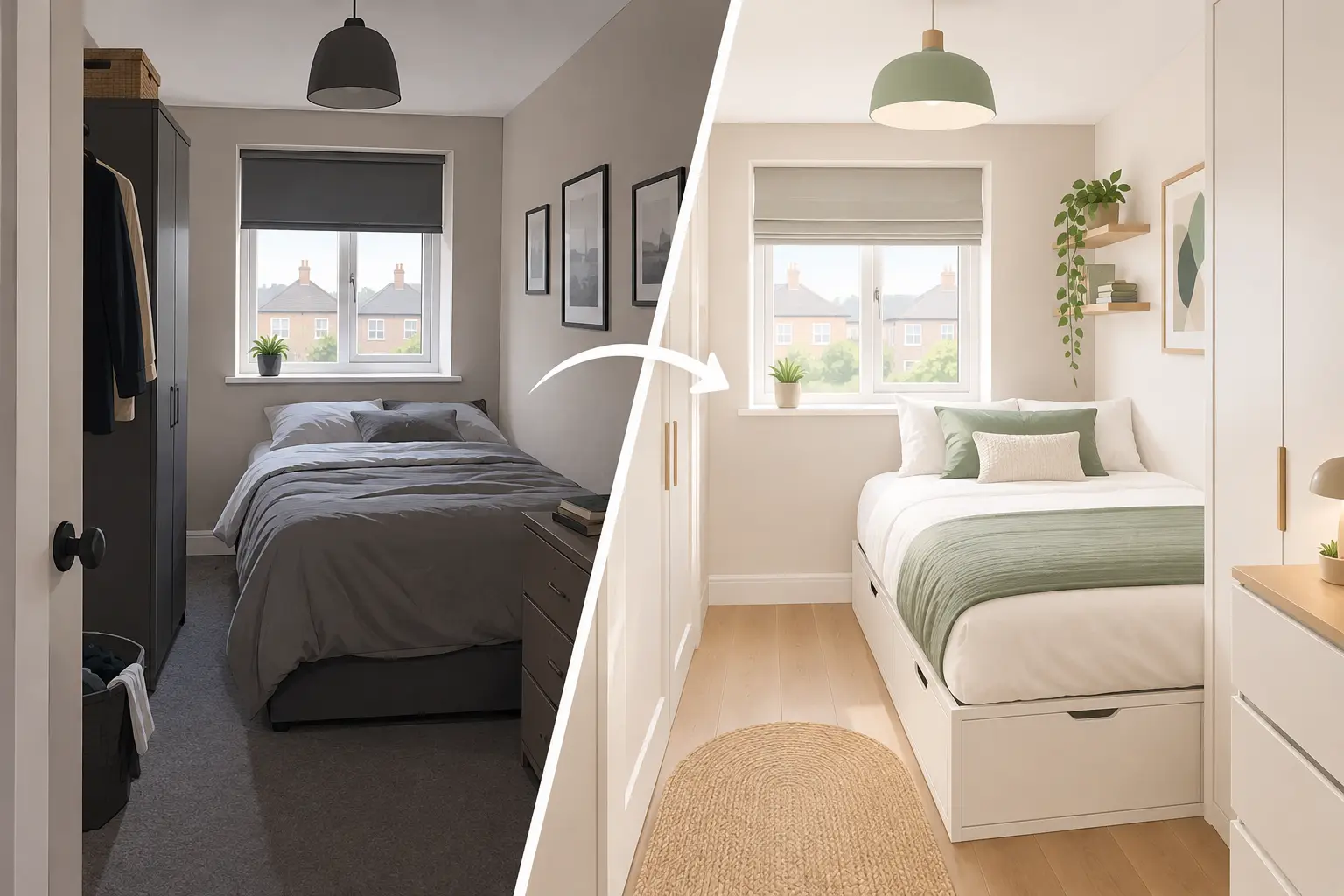
A compact bedroom makeover case study is most useful when it starts with the real limitation: there is not enough floor space to waste. In this example, a small second bedroom had become a holding area for spare bedding, seasonal clothes and a bed that offered comfort but no storage. The aim was not to make the room look bigger through decoration alone. It was to create a comfortable, practical bedroom with enough storage for everyday living.
The room measured approximately 2.6m by 3.1m. It needed to work for a homeowner’s visiting family member now, while also being suitable as a proper bedroom if the household’s needs changed later. That meant choosing furniture with a clear purpose, keeping access around the bed sensible and avoiding several small storage pieces that would make the room feel crowded.
The starting point: a bed taking up space without giving any back
The original double bed frame left a large unused area underneath. A narrow chest of drawers sat near the door, while clothes were stored in a mix of bags, boxes and an overfilled wardrobe elsewhere in the home. Although the room contained only a few items, it felt busy because every item sat in view.
The main issue was layout rather than a lack of furniture. A standard bed can take up more than half the available floor area in a compact bedroom, so it needs to earn its place. In a room this size, adding extra cabinets around a non-storage bed often reduces usable space further.
The makeover therefore focused on three decisions: replace the bed with an ottoman storage bed, add one appropriately sized wardrobe, and select a mattress that would make the room genuinely comfortable for regular use.
The compact bedroom makeover case study: the furniture plan
A double end-opening ottoman bed was placed against the longest wall, with the headboard positioned away from the window. This retained a clear route from the door to the window and allowed space to open the wardrobe without hitting the bed.
An ottoman base was the most effective storage choice for this room because it used the full footprint of the bed. Instead of relying on shallow drawers at each side, the lift-up base provided a large enclosed area for spare duvets, pillows, luggage and out-of-season clothing. These are items that take up plenty of room but are not needed every day.
The bed was finished in a neutral grey upholstered fabric. This was a practical choice rather than simply a style decision. Neutral upholstery works with changing bedding and wall colours, which is helpful where a room may later be used by a different family member, tenant or guest. A tall padded headboard also gave the bed a finished look without requiring a separate feature wall or extra furniture.
A compact two-door wardrobe was fitted on the wall closest to the door, where its doors could open without blocking the walkway. A full-width mirrored door would have added light, but in this case a plain wardrobe was chosen because the room already had a large window and the owner preferred a calmer look. This is a useful reminder that mirrors can help in a small bedroom, but they are not essential in every layout.
Rather than adding bedside cabinets, one narrow bedside table was used on the open side of the bed. It provided a surface for a lamp, phone and glass of water without making both sides of the bed feel boxed in. A wall-mounted light on the other side would be an equally practical option where a bedside table is not needed.
Why the ottoman bed made the difference
The biggest gain came from moving concealed storage under the mattress. The room no longer needed plastic boxes along the wall or extra drawers competing for floor space. With the stored items out of sight, the wardrobe could be reserved for hanging clothes, folded essentials and items used regularly.
An ottoman bed does require enough room to lift the base comfortably. End-opening designs are often a strong choice in narrow rooms because the bed opens from the foot end, rather than into the space beside it. Side-opening ottoman beds can work well too, particularly where there is more clearance on one side. It depends on the door position, window placement and how the bedroom will be used.
For buyers comparing storage beds, it is worth measuring more than the mattress size. Check the room dimensions, the swing of the bedroom door, wardrobe access and the route needed to bring the bed into the property. In a tight stairwell or flat entrance, delivery access matters as much as the final layout.
Choosing comfort without overcomplicating the mattress
A stylish bed frame cannot compensate for an uncomfortable mattress. For this makeover, a medium-feel mattress was selected to give a balanced level of support for different occasional users. It suited the brief better than choosing an especially soft or very firm feel based on one person’s preference.
For a bedroom used every night, the mattress choice should be more personal. Body weight, preferred sleeping position and any existing comfort concerns all matter. A pocket-sprung mattress can be a good option for couples because it offers more individual support across the surface. Memory foam can suit people who enjoy closer contouring, although some sleepers prefer a more breathable traditional sprung feel.
There is a trade-off in a compact room: a deeper mattress can look more luxurious against an upholstered headboard, but it also raises the overall bed height. For shorter users, or where the room has a low window ledge, checking the finished height is worthwhile before ordering.
What changed once the room was organised
The floor around the bed became easier to clean, the window was no longer partly blocked by storage boxes and the room could be prepared for guests in minutes. More importantly, the furniture had defined jobs. The ottoman stored bulky items, the wardrobe held everyday clothing, and the single bedside table dealt with the small items that otherwise collect on the floor.
The visual improvement was not created by filling the room with decorative accessories. It came from reducing what was on display. Coordinated furniture in complementary neutral tones made the room feel considered, while the upholstered bed remained the clear focal point.
This approach is also useful for landlords and housing providers furnishing smaller bedrooms. A storage bed and wardrobe package can be more practical than supplying multiple low-cost cabinets, particularly where tenants need immediate usable storage. The right combination can reduce clutter without making the room difficult to move around in.
Costs, priorities and where to avoid false savings
A compact bedroom makeover does not require every item to be replaced. In this case, the existing curtains and flooring stayed in place. The spend was concentrated on the furniture that changed the room’s function: the storage bed, mattress and wardrobe.
If the budget is limited, prioritise the bed base and mattress first. These affect both daily comfort and storage capacity. A wardrobe can be added later if needed, but buying a bed without storage and then trying to solve the problem with baskets, boxes and extra drawers often costs more over time.
It is also sensible to avoid buying furniture solely because it is narrow. Very slim wardrobes can look suitable online but offer little usable hanging depth. Likewise, a cheap drawer unit may fit into a corner yet provide less storage than the ottoman space already available beneath the bed. Measure the internal storage you need, not just the external space you have.
A practical finish for a small bedroom
The finished room proved that a compact bedroom does not need to feel temporary or overfilled. It needs fewer pieces, chosen more carefully. At AAA Furniture UK Ltd, storage beds, upholstered bed frames, mattresses and coordinating bedroom furniture make it easier to build that kind of practical setup from one place.
Before choosing colours or cushions, measure the room and decide what must be stored inside it. Once the bed is working hard enough, the rest of the makeover becomes much simpler.