

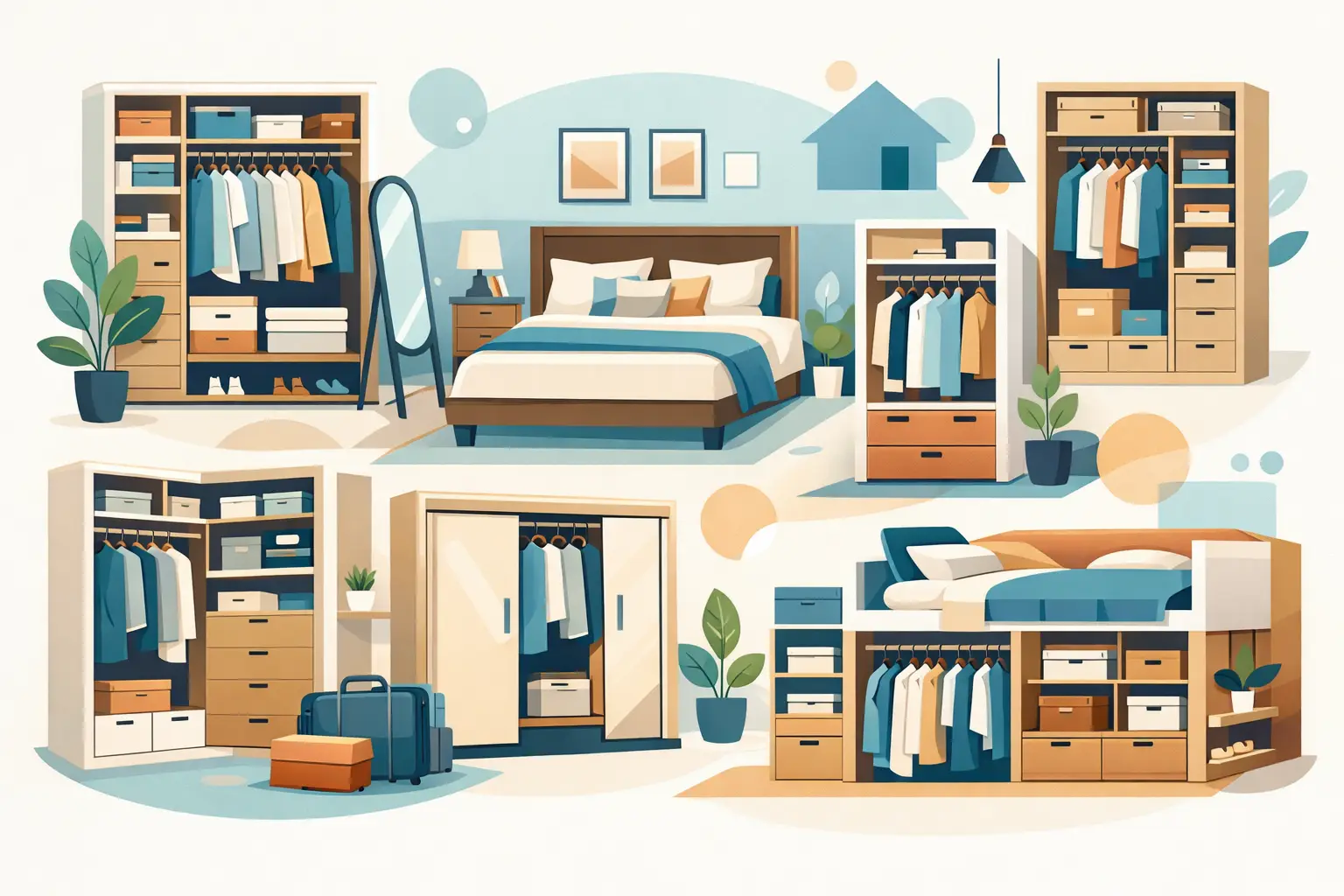
A wardrobe can take up more visual and floor space than the bed in a compact room, especially when its doors need a clear swing area. The best wardrobe ideas for small bedrooms do not simply mean buying the narrowest unit available. They mean choosing storage that suits the wall, the doorway, the bed position and the amount of clothing you actually need to store.
For a box room, a rented flat or a smaller guest bedroom, the right wardrobe can make daily life easier without making the room feel closed in. Start with measurements, then choose the door style, height and internal layout that give you the most usable storage for the space.
Start with the room, not the wardrobe
Measure the available wall from skirting board to skirting board, then check the ceiling height and note sockets, radiators, window ledges and door openings. A wardrobe that technically fits the wall can still be awkward if it blocks a drawer, catches on the bedroom door or leaves no route around the bed.
Also measure the clearance in front of the wardrobe. Hinged doors are a familiar and often affordable choice, but they need room to open fully. If the bed sits close to the wardrobe, this can quickly create a cramped layout. Sliding doors move across the front of the unit instead, making them a stronger option where walking space is limited.
Think about what will go inside before choosing the width. Someone with long dresses, coats and shirts needs more hanging height than someone who mainly stores folded clothes. A tall, narrow wardrobe with a sensible rail and shelf arrangement may work harder than a wider design filled with unused space.
A quick measuring checklist
Before ordering, check these practical details:
- wall width and ceiling height
- depth available without narrowing the walkway
- space needed for hinged doors, if selected
- the route through hallways, staircases and doorways for delivery
- where bedside tables, drawers and the bed will sit
This preparation helps avoid a common mistake: buying a wardrobe that looks right online but makes the finished room difficult to use.
Wardrobe ideas for small bedrooms that save floor space
Choose sliding doors for tighter walkways
Sliding-door wardrobes are one of the most effective choices for a bedroom with limited clearance. Because the doors do not project into the room, they allow a wardrobe to sit opposite or beside the bed without demanding extra opening space.
They work particularly well along the longest uninterrupted wall. A two-door sliding wardrobe can provide a generous hanging area and shelves while keeping the room circulation clear. The trade-off is that only one side of the wardrobe is open at a time, so the internal layout needs to be well planned. Split rails, shelves and drawers help keep both sections easy to access.
Use mirrored doors to reduce visual bulk
A mirrored wardrobe door has a practical purpose and can remove the need for a separate full-length mirror. More importantly in a small bedroom, it reflects light and gives the impression of greater depth. This is useful in rooms with one small window or darker décor.
A full mirrored finish is not essential. A wardrobe with one or two mirror panels can be enough to brighten the room while retaining an upholstered, wood-effect or gloss look that suits the rest of the furniture. If fingerprints are a concern in a family home, choose a design that is straightforward to wipe down and place it away from the busiest route through the room.
Go tall rather than wide
When floor width is restricted, use height. A taller wardrobe takes advantage of vertical space and gives you upper shelves for bedding, seasonal clothing, luggage or items that do not need daily access.
Leave a sensible gap above the top if the ceiling is uneven, unless you are choosing a fitted-style solution. A wardrobe that reaches close to the ceiling can look neater and reduce the dusty area above it, but it must still be practical to install and open. Keep a folding step stool elsewhere in the home for high shelves rather than filling accessible lower storage with rarely used items.
Consider a corner wardrobe
Corners are often wasted in smaller bedrooms, particularly where the bed occupies the main wall. A corner wardrobe can turn this awkward area into useful hanging storage and may leave a clearer central floor area than two separate units.
The key consideration is door access. A corner design needs enough room for its doors to open without hitting the bed or a bedside cabinet. This option suits rooms with an unused corner and slightly more space at the foot of the bed, rather than very narrow box rooms.
Select a narrow wardrobe with drawers nearby
Not every small bedroom needs one large wardrobe. A narrow hanging wardrobe paired with a chest of drawers can be more flexible, especially for one person or a child’s room. The wardrobe handles shirts, dresses and jackets, while drawers take care of knitwear, underwear and folded clothing.
This arrangement is also useful where one wall is interrupted by a window or chimney breast. Matching finishes keep the pieces looking coordinated rather than pieced together. Choose drawers with a shallow depth only if they still hold the items you need, as overly compact drawers can become frustrating very quickly.
Make the wardrobe interior work harder
The outside dimensions matter, but the inside determines whether the wardrobe solves your storage problem. A basic full-width rail may not be the best use of a tall unit. If most of your clothes are shorter items, a double hanging rail can nearly double the amount you store on hangers.
Shelves are useful for folded clothes and bags, while lower drawers or storage boxes help contain smaller items. Keep everyday clothing at eye level or below, and reserve the top shelf for spare duvets, holiday clothes and other occasional items. This simple arrangement reduces the need to pull everything out to find one jumper.
Avoid filling a wardrobe to its maximum capacity from day one. A little spare room makes it easier to put laundry away and stops rails from becoming tightly packed. For landlords furnishing rental bedrooms, a straightforward combination of hanging space and shelves is usually more practical for a wide range of tenants than an overly specialised internal design.
Pair the wardrobe with the right bed storage
A small bedroom rarely benefits from putting every item into the wardrobe. If floor space is at a premium, an ottoman storage bed can take care of bulky bedding, spare pillows, towels and out-of-season items. This allows the wardrobe to stay focused on clothing, which makes its contents easier to organise.
Divan beds with built-in drawers are another practical option, although check that the drawers will open around bedside furniture and walls. Ottoman beds lift upwards rather than outwards, so they can be better where there is little side clearance. The choice depends on how the room is laid out and how often you need access to stored items.
Using coordinated bedroom furniture also helps a compact room feel calmer. A wardrobe, chest of drawers and bedside cabinets in compatible colours or finishes create a more considered look than several unrelated pieces. Lighter tones, clean handles and simple lines generally keep the room feeling less busy.
Leave room to live in the bedroom
The most spacious-looking small bedrooms are not necessarily those with the least furniture. They are the rooms where every piece has a clear job and where there is still an easy route from the door to the bed, wardrobe and window.
Try to keep the centre of the room as open as possible. Position the wardrobe against the wall that creates the least obstruction, rather than automatically placing it opposite the bed. If a large wardrobe is necessary, reduce clutter elsewhere by choosing a storage bed and limiting open shelving, which can make a small room look crowded even when it is tidy.
Lighting also affects how large the wardrobe feels. A ceiling light paired with bedside lamps gives better coverage than one central light alone. Mirrors and pale finishes can help reflect that light, while a dark wardrobe may suit the room if it matches the bed and the walls are kept lighter. It depends on the overall scheme, not a single colour rule.
Buy for long-term use, not just today’s gap
A wardrobe is a substantial bedroom purchase, so check the full product dimensions, door type, internal storage and assembly requirements before you order. Think about whether your clothing needs may change, whether the room could become a guest room, and whether you may move home in the next few years.
For a straightforward way to furnish a compact bedroom, choose the wardrobe first, then match the bed and supporting furniture around it. AAA Furniture UK Ltd offers bedroom furniture designed to combine practical storage with an attractive, coordinated finish, helping shoppers create a room that feels properly furnished rather than overfilled.
The right wardrobe should not dominate a small bedroom. It should give your clothes a proper home, keep the floor clearer and leave the room comfortable enough to enjoy every day.