

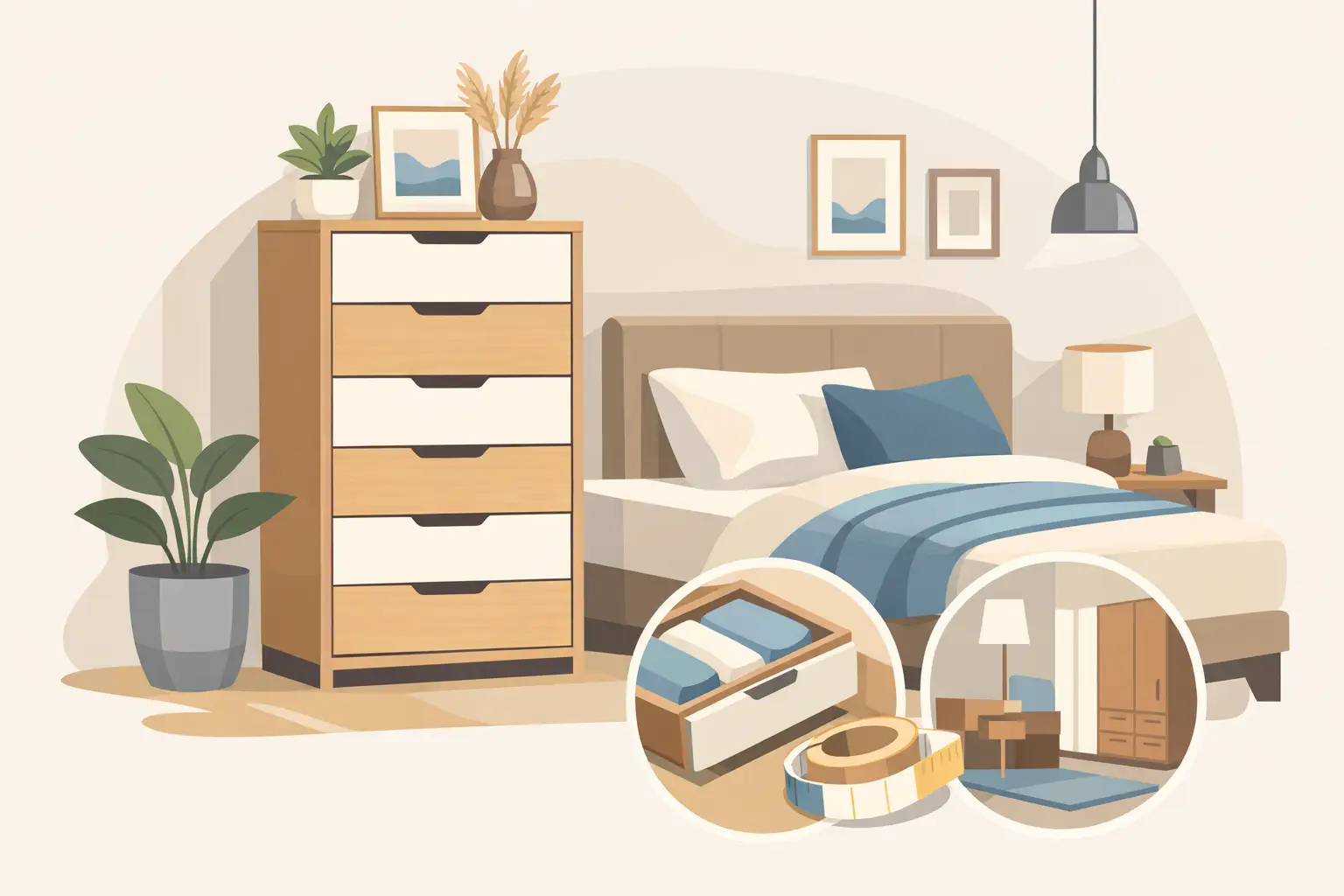
A tall chest of drawers bedroom unit can make a noticeable difference when floor space is limited but everyday clothing still needs a proper home. It gives you useful vertical storage without taking the width of a large double chest, helping keep a bedroom clear, practical and easier to live in. For flats, box rooms, guest bedrooms and rental properties, it is often one of the most sensible pieces of furniture you can buy.
The best choice is not simply the tallest unit available. Drawer capacity, overall depth, available wall space and the height of nearby furniture all affect whether the chest works well in your room. A good-looking finish matters too, especially when you are matching a new chest with an upholstered bed, wardrobe or dressing table.
Why choose a tall chest of drawers for the bedroom?
Tall chests are designed to use height rather than valuable floor area. While a wide chest spreads storage across a longer wall, a tall unit offers several drawers in a narrow footprint. This can leave room for bedside tables, a wardrobe door to open freely, or a clearer route around the bed.
They are particularly useful for folded clothes such as T-shirts, knitwear, jeans, nightwear and children’s clothing. Separate drawers make it easier to organise different categories, so everyday items are not mixed together in one large storage space. In a shared bedroom, one person can also use a tall chest as their dedicated storage unit rather than relying on limited wardrobe shelves.
There is a trade-off. A tall chest will not provide the same broad top surface as a low, wide chest, and the highest drawer may be less convenient for smaller users. If you want space for a television, a large mirror or lots of display items, a wider chest may suit the room better. For most compact bedrooms, though, vertical storage is the more efficient option.
Measure before choosing a tall chest of drawers bedroom unit
Furniture that looks compact online can feel very different once it is in place. Measuring properly before ordering prevents awkward gaps, blocked doors and drawers that cannot open fully.
Start with the wall width, then check the maximum depth you can allow. Bedrooms often need a clear walkway between the end or side of the bed and the chest. As a useful guide, aim to retain enough room to stand comfortably and open the drawers without having to move around them sideways.
Next, consider drawer clearance. The overall depth of the cabinet is only part of the measurement. Drawers pull forwards, so position the chest where open drawers will not hit the bed, a radiator, a door or another piece of bedroom furniture. This matters most in narrow rooms with a double or king size bed.
Height is equally worth checking. A tall chest should sit comfortably beneath any shelf, picture rail or window ledge. If it is beside a wardrobe, choosing furniture with a similar height and finish can make the room feel more coordinated. If it sits alone, leave some breathing space around it rather than squeezing it into a gap that makes the room look crowded.
For older houses, also check skirting boards and uneven floors. A chest placed against a deep skirting board may sit slightly forward from the wall. It is a small detail, but one that can affect the available walkway in a compact bedroom.
Think about what will go in each drawer
The number of drawers gives a quick indication of storage, but drawer design is more useful than the headline figure alone. Deep drawers are practical for bulky jumpers, bedding, towels and thicker winter clothing. Shallower drawers are better for underwear, socks, accessories and smaller folded items that can otherwise disappear into a large space.
A mix of drawer sizes is often the most flexible arrangement for a main bedroom. For a child’s room or a rental property, several equal-size drawers can be easier to use and simpler to allocate. Landlords furnishing multiple rooms may also prefer a repeatable chest design that suits a wide range of tenants and room layouts.
Before buying, consider whether the chest will carry only clothes or provide general bedroom storage. If it will also hold paperwork, chargers, toiletries or spare linen, choose drawers with enough internal depth and a sturdy construction. Overfilled drawers can be frustrating to use and may reduce the life of the furniture over time.
Choose a finish that works with your bed and wardrobe
Bedroom furniture does not have to be identical to look well planned. It does, however, need to share a clear visual direction. A tall chest is a prominent vertical piece, so its colour, handles and overall shape can influence how the whole room feels.
White and light neutral finishes can help smaller bedrooms feel brighter and less heavy. They work well with grey, cream and many upholstered bed styles. Darker wood-effect finishes can bring warmth and definition, especially in larger rooms with pale walls, but they may look imposing if the room has limited natural light.
For a more coordinated look, match the chest to the wardrobe first. These are usually the two largest storage pieces in the room and sit at a similar visual height. Then choose bedside tables and a dressing table in a complementary finish. A matching bedroom furniture range makes this straightforward, but combining pieces can work well when the tones and hardware feel intentional.
The top surface should also be considered. A tall chest can hold a small lamp, framed photograph, jewellery box or compact mirror, but avoid treating it as overflow storage. Keeping the top mostly clear makes the room look calmer and gives you a useful surface when getting ready.
Safety and everyday placement matter
Because a tall chest has more height than width, it should be placed on a level floor and used sensibly. Avoid opening several loaded drawers at the same time, particularly where young children are present. If manufacturer guidance recommends securing the unit to the wall, follow it. This is a sensible precaution in family homes and rental properties alike.
Keep the chest away from damp external walls where possible, and do not position it directly against a heat source. Consistent care helps protect drawer runners, finishes and fittings. A soft cloth is normally enough for routine cleaning, while spills should be wiped promptly rather than left to mark the surface.
Consider the daily route through the room as well. A chest by the bedroom door can be useful if there is sufficient clearance, but not if it creates a pinch point when carrying laundry or changing bedding. A position near the wardrobe may create one efficient dressing zone, especially when paired with a mirror above or beside the unit.
Getting more from a compact bedroom
A tall chest works best as part of a wider storage plan. If drawers hold folded clothing, the wardrobe can be reserved for hanging garments, coats and longer items. Under-bed storage can take bulky bedding, seasonal clothes or spare pillows. This division keeps each area easier to manage and stops one piece of furniture from becoming overloaded.
In a small bedroom, choose furniture with a clear purpose. A storage bed, a practical wardrobe and a tall chest can often provide more usable storage than a room filled with occasional tables and open shelving. The aim is not to fill every wall. It is to make sure each piece earns its place.
For households replacing several items at once, buying coordinated bedroom furniture can also reduce the difficulty of matching colours and proportions. AAA Furniture UK Ltd offers practical bedroom pieces designed to work alongside storage-focused beds, helping shoppers create a more organised room without paying for unnecessary extras.
A tall chest of drawers is a straightforward purchase, but the right dimensions and layout can improve how a bedroom functions every day. Measure the room, plan the drawer contents and choose a finish that supports the rest of your furniture. You will gain useful storage while keeping the bedroom comfortable enough to move around, relax in and keep tidy.