

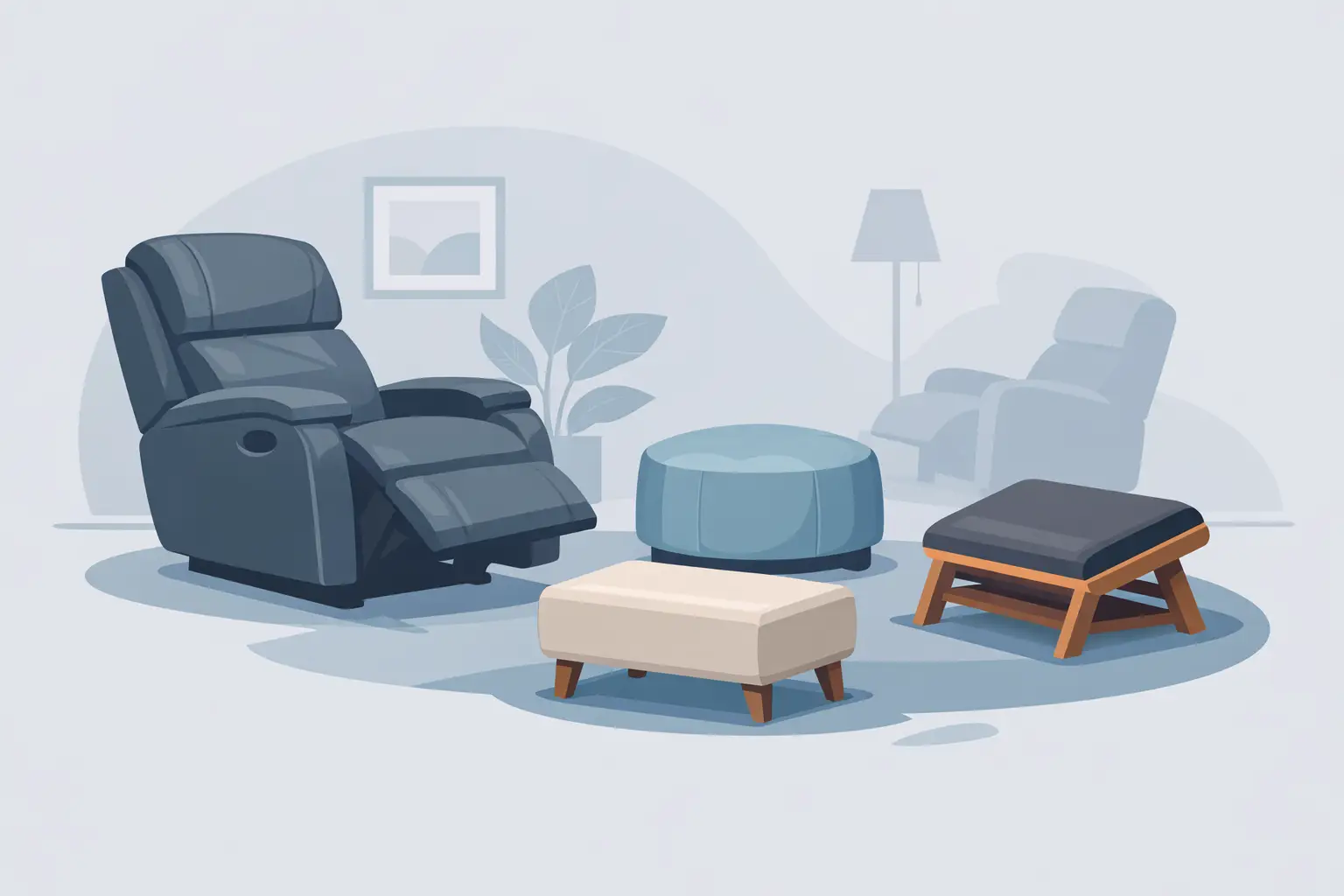
A recliner can be the most comfortable seat in the room, but the wrong footstool can make it feel awkward rather than relaxing. Finding the best footstool for a recliner chair means looking beyond colour and choosing a piece with the right height, proportions and support for the way you sit. It also needs to suit the available floor space, particularly in a compact lounge or rental property.
A separate footstool is a practical choice when you want the comfort of putting your feet up without committing to a larger reclining sofa. It can double as occasional seating, a surface for a tray or, in some designs, useful hidden storage. The key is to buy one that works with your chair rather than simply placing any upholstered stool in front of it.
What makes the best footstool for a recliner chair?
The best match is usually a footstool that supports your lower legs comfortably while allowing you to lean back into the recliner. Your heels should rest naturally on the stool without your knees being forced too high or left hanging down. A footstool that is too low can feel more like a casual pouffe, while one that is too tall may put pressure behind the knees and spoil the reclining position.
For most recliner chairs, a footstool sitting a little below the seat cushion height is a sensible starting point. There is no single measurement that suits every chair, because seat heights vary. As a guide, measure from the floor to the top of your recliner seat, then look for a stool that is several centimetres lower. This lets your legs slope gently upwards when you are seated.
Width matters as well. A narrow footstool may look neat, but it can be restrictive if you tend to shift position, cross your ankles or share the seat with a child. A wider rectangular or square design gives more room for both feet. In a smaller living room, a compact round stool can be easier to walk around and less likely to create a hard corner in a busy route through the room.
Match the shape to the way you relax
Rectangular footstools are a reliable option for traditional recliner chairs and larger leather armchairs. They give a broad, level surface and often look balanced in front of a high-back chair. Square stools offer a similar amount of support in a more compact footprint, making them useful beside a sofa or between two occasional chairs.
Round footstools have a softer look and can suit curved recliners or contemporary living rooms. They are particularly helpful where children are moving around the room, as there are no sharp corners. The trade-off is that a round top may provide less usable space for fully stretching out both legs.
An upholstered bench-style footstool is worth considering in a larger lounge. It can sit in front of a recliner when needed, then serve as extra seating when guests visit. Make sure it is not so long that it blocks the recliner mechanism or makes the chair difficult to get in and out of.
Choose the right height and distance
Before ordering, sit in your recliner and measure the clear space in front of it. Remember that a manual or power recliner often moves forwards as it opens. A separate stool should be easy to slide closer when you are relaxing and move aside when you need to stand up.
Place the footstool far enough away that your calves can rest on it rather than being pressed tightly against the edge. For many people, this will be around 30 to 45 cm from the front of the chair, but your height and preferred reclining angle will affect the final position. Taller users normally need a little more distance and a larger top surface.
If the recliner already has a built-in footrest, a separate footstool is not always necessary. It can still be useful as a flexible extra seat or for supporting the legs when the chair is upright, but it should not obstruct the mechanism. Avoid placing a heavy footstool where it could be caught by the extending footrest.
Firm support is better than a deep, soft top
A generously padded footstool can look inviting, but a very soft cushion may sink too much under your legs. This can be uncomfortable over a long film, reading session or evening in front of the television. A firmer upholstered top provides more even support and holds its shape better with regular use.
Look at the base as carefully as the cushion. Wooden legs create a lighter, more traditional furniture look, while a solid boxed base can feel more substantial and may include storage. Whichever style you choose, it should sit level on the floor and remain stable when your feet move. Felt pads are useful on hard flooring, while a rug can stop light stools from sliding away.
Fabric, leather and colour matching
You do not have to buy a footstool in exactly the same upholstery as your recliner. An exact match can look smart, especially with a leather recliner, but coordinating colours and textures often give a more considered result. For example, a charcoal fabric chair can work well with a grey, oatmeal or muted blue footstool, depending on the rest of the room.
Leather or faux leather footstools are easy to wipe clean and suit households with children, pets or frequent visitors. They work especially well with leather recliners, although different leather finishes can be difficult to match perfectly. If the chair is well-used, choosing a complementary tone rather than trying to replicate an older shade may look better.
Fabric footstools offer more choice in colour and texture. Woven upholstery can make a leather recliner feel less formal, while velvet brings a softer, more decorative finish to a reading corner. For everyday use, choose a durable fabric in a mid-tone shade that will not immediately show marks, dust or pet hair.
The legs and trim should also relate to the chair and surrounding furniture. Dark wood suits classic recliners and traditional cabinets, while black metal or pale timber can suit a more modern room. The aim is not to make every piece identical, but to ensure the footstool belongs in the space.
Is a storage footstool a good choice?
A storage footstool can be one of the most useful options for a living room that needs to work harder. It offers somewhere to keep throws, cushions, magazines, remote controls or children’s toys, helping the room feel tidier without adding another cabinet. This is particularly useful in flats, smaller homes and rental properties where storage is limited.
However, storage designs are often heavier and taller than simple padded stools. Check that the lid is secure and that the top is firm enough for use as a footrest. A hinged lid should open safely without catching the recliner or the wall behind it. If you expect to move the stool regularly, a lighter lift-off lid may be more convenient.
For a recliner used mainly by one person, a compact storage footstool can sit nearby as a practical companion rather than directly in front of the chair. You can pull it into position when needed, then use it as a side surface or concealed storage during the day.
Buying checks before you choose
A footstool is a small item compared with a sofa or bed, but checking the practical details first prevents an inconvenient purchase. Confirm the overall height, width and depth, then compare them with your recliner and available floor space. If the footstool has legs, allow for the slightly smaller padded top area where your feet will rest.
Consider who will use it. A low, lightweight stool may be ideal for a younger household, while a firmer, stable model is often more comfortable for older users who need dependable support when adjusting their position. For landlords and furnished properties, hard-wearing upholstery and easy-clean finishes can provide better long-term value than a delicate fabric.
Finally, think about how the footstool will look when it is not being used with the recliner. The most successful choice is not just comfortable at the end of the day – it is useful enough to earn its place in the room. Measure first, choose a stable height and select an upholstery that suits everyday life, and your recliner will have the comfortable finishing touch it deserves.