

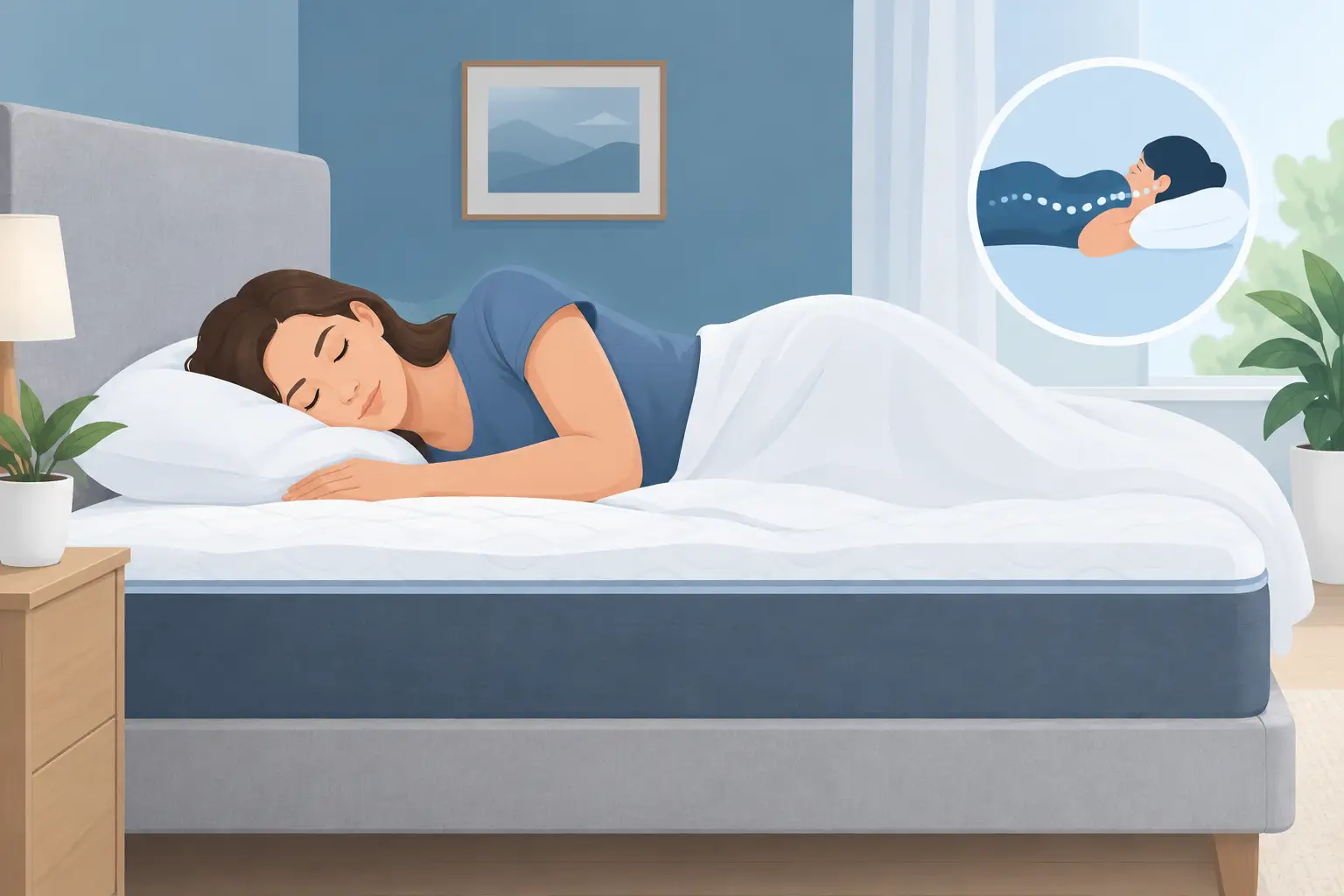
A mattress can feel perfectly comfortable for a few minutes in a showroom, then leave a side sleeper with a sore shoulder or stiff lower back after a week at home. If you are asking what mattress suits side sleepers, the answer usually comes down to pressure relief at the shoulders and hips, combined with enough support to keep your spine in a straighter, more natural position.
For most people, a medium or medium-firm mattress is the sensible starting point. However, body weight, sleep temperature, existing aches and the type of bed base all affect the right choice. The aim is not simply to buy the softest mattress available. It is to choose one that cushions the parts of your body that press into the mattress without allowing your hips to dip too far.
What mattress suits side sleepers best?
Side sleeping puts more concentrated pressure on the shoulder, hip and outer knee than sleeping on your back. A suitable mattress needs a comfort layer that gives way around these areas, while its deeper layers hold the body level. When that balance is right, your head, shoulders, back and hips are less likely to be forced out of line.
A medium mattress often works well for average-weight side sleepers because it offers a gentler surface feel without becoming unsupportive. A medium-firm option can suit people who are heavier, share a bed, or prefer a slightly steadier feel when turning over. Lighter people may find a firm mattress too unforgiving, particularly around the shoulders.
Personal comfort matters as much as the label. Mattress firmness ratings are helpful, but they are not measured to one universal UK standard. One retailer’s medium can feel close to another retailer’s medium-firm, so it is worth reading the product description for the materials and support style as well as the firmness level.
Start with pressure relief, then check support
A side sleeper needs the mattress surface to contour around the shoulder rather than pushing against it. If your arm regularly goes numb, you wake with shoulder pain, or you constantly move position during the night, your mattress may be too firm or have worn-out comfort layers.
At the same time, too much softness can create a different problem. When the hip sinks below the shoulder, the lower back may curve downwards and feel strained by morning. A supportive mattress lets the shoulder settle in slightly but keeps the hips from dropping excessively.
Your pillow also has a part to play. A mattress that allows your shoulder to sink a little normally needs a pillow with enough depth to fill the space between your neck and the mattress. If your pillow is too flat or too high, even a well-chosen mattress may not feel right.
Signs your current mattress is not working
There are a few straightforward clues that your bed may be the issue. Persistent shoulder or hip discomfort that eases after you get up can point to poor pressure relief. A noticeable dip where you sleep, creaking springs, or rolling towards the middle of the bed are also reasons to consider a replacement.
If you sleep better in a different bed but not your own, do not assume you need the same model. Think about whether the other bed felt more cushioned, more stable or cooler, then use that information to narrow down the type of mattress you need.
Which mattress type is right for side sleeping?
Different mattress constructions can all suit side sleepers. The better choice depends on whether you prioritise a softer feel, stronger edge support, easier movement or a cooler night’s sleep.
Pocket sprung mattresses
Pocket sprung mattresses use individual springs that respond separately to your body. This helps the mattress adapt around the shoulder and hip while offering a supportive feel through the waist and lower back. They are a practical all-round choice, especially for couples, because movement on one side is less likely to disturb the other person.
Look for a pocket sprung model with a quality comfort layer on top, such as foam, fibre or natural fillings. Springs provide the main support, but the upper layers make the biggest difference to pressure relief. A very firm pocket sprung mattress with minimal padding may still feel too hard for a lighter side sleeper.
Memory foam mattresses
Memory foam responds to body heat and weight, creating a close-contouring feel that many side sleepers find comfortable. It can be particularly helpful when shoulder and hip pressure are the main concerns. Foam also reduces movement transfer, which is useful if one person is a restless sleeper.
The trade-off is that some people find traditional memory foam warmer or slower to respond when changing position. Gel-infused foams, open-cell designs and breathable covers can improve airflow, but anyone who sleeps very warm may prefer a pocket sprung or hybrid mattress.
Hybrid mattresses
A hybrid mattress combines pocket springs with foam or other comfort layers. This gives side sleepers pressure relief near the surface along with the responsive support and airflow of springs underneath. It is often a strong middle-ground option for couples with different comfort preferences.
Hybrids can vary greatly. Some have a deep foam layer and feel close to memory foam, while others have a thinner comfort layer and feel more spring-led. Check the depth of the comfort layers rather than choosing by the word hybrid alone.
Orthopaedic and firmer mattresses
An orthopaedic mattress is usually designed to offer a firmer, more supportive sleeping surface. It can suit side sleepers with a larger build or those who genuinely prefer a firmer bed. The term itself does not guarantee medical benefits, and firmer is not automatically better for back pain.
For a side sleeper, an orthopaedic-style mattress is best when it still includes enough cushioning over the springs or support core. If you feel pressure building quickly at the shoulder when lying on your side, a softer comfort layer or medium-firm alternative may be a better fit.
Choose firmness for your build and sleeping habits
Body weight affects how deeply you sink into a mattress. A lighter sleeper may barely compress a firm surface, causing uncomfortable pressure points. A heavier sleeper may find a soft mattress lacks the support needed around the hips.
As a broad guide, lighter adults often prefer medium or medium-soft comfort, average-weight adults commonly suit medium or medium-firm, and heavier adults may benefit from medium-firm to firm support. This is a starting point rather than a rule. Someone with broad shoulders may still want more cushioning, while a person who alternates between their side and back may prefer a slightly firmer feel.
Couples should also consider motion isolation and usable sleeping space. A king size bed provides more room to turn and reduces the chance of one person rolling into the other’s sleeping area. If one partner needs a softer feel and the other needs firmer support, a zip-and-link mattress or separate mattresses on a suitable bed base can be worth considering.
Do not overlook the bed base
The base beneath your mattress affects comfort, support and lifespan. A divan base gives a stable, even foundation and is a practical option for bedrooms where storage matters. Ottoman storage beds offer valuable space for bedding, seasonal clothes or spare pillows while keeping the room tidier.
With a slatted bed frame, check that the slats are secure and evenly spaced. A damaged or widely spaced base can make a mattress feel less supportive and may lead to uneven wear. Always check the mattress manufacturer’s guidance for the bed base it is designed to sit on.
Bed size matters too. A standard double can feel limited for two adults, especially if both sleep on their sides and need room for their knees and arms. Moving to a king size, where the bedroom allows it, can improve comfort without changing the mattress construction at all.
Practical checks before you buy
Read the mattress depth, filling details, firmness description and recommended base type. Consider access as well: a deep mattress may be heavier to move upstairs, while a rolled mattress can be easier to take through tighter hallways. If you have a bed frame with a high footboard or side rails, make sure the finished mattress height will still feel comfortable when getting in and out of bed.
For rental homes, guest rooms and furnished properties, durability and straightforward replacement are often as important as a highly specialised comfort feel. A medium or medium-firm pocket sprung or hybrid mattress is usually a sensible, widely appealing choice for adult side sleepers, provided it includes adequate padding.
A mattress should support better sleep, not add another compromise to the bedroom. Choose the feel that keeps pressure off your shoulder, holds your hips comfortably and suits the bed base and space you already have – then you are far more likely to wake up ready for the day.