

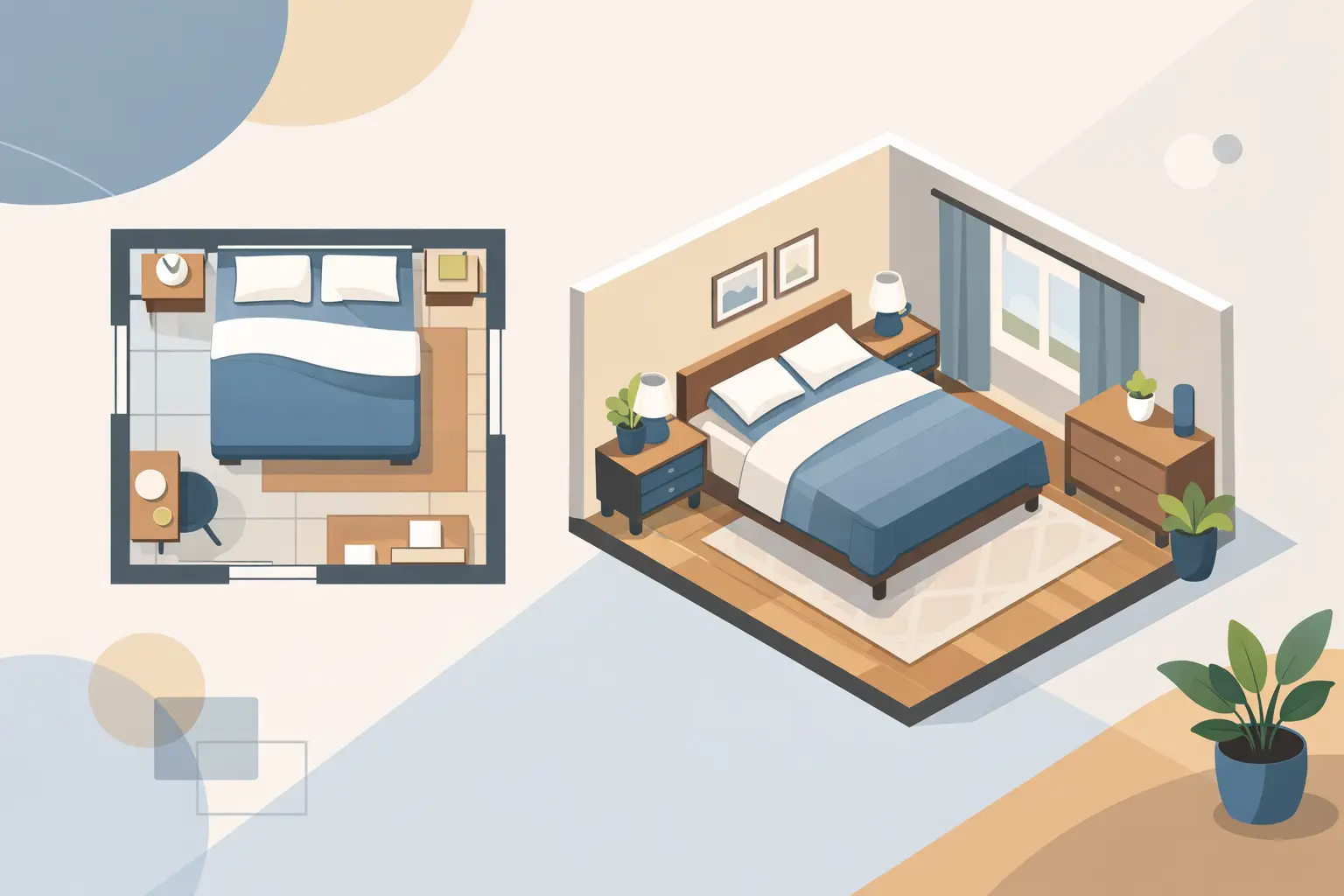
A small bedroom rarely feels short of space because of one large item alone. More often, it is the result of a bed that is too large for the room, drawers that cannot open properly, and everyday belongings with nowhere sensible to go. This small bedroom layout guide helps you plan around the bed first, then choose storage and furniture that make the room easier to live in.
The aim is not to leave the room looking empty. It is to give you enough clear floor space to move comfortably, get dressed and make the bed, while still having the storage you need. For renters, first-home buyers, family homes and landlord properties, that usually means choosing furniture that works harder rather than simply buying less of it.
Start your small bedroom layout with measurements
Before looking at bed styles or wardrobes, measure the room at its widest and longest points. Then mark the position of the door, windows, radiators, fitted cupboards, plug sockets and any awkward alcoves. These details decide where furniture can realistically sit.
Measure the available wall space as well as the floor. A bedroom may technically fit a larger bed, but that does not mean it will function well once bedside furniture and a wardrobe are added. As a useful starting point, try to keep a clear walkway of around 60 cm where possible. A little less can work at one side of a bed in a very tight room, but it should not make opening the door or accessing storage difficult.
Also measure access into the property. Check stairways, landings and tight turns before ordering an upholstered bed frame, divan base or large wardrobe. This is particularly relevant in flats and older houses, where bedroom furniture may fit the room but be challenging to carry upstairs.
Choose the bed size for the room, not just the mattress
The bed is normally the largest item in a bedroom, so it sets the layout. A small double is often a sensible option for a compact main bedroom, guest room or rental property. At 120 cm wide, it provides more sleeping room than a single without taking up as much floor space as a standard double.
A double bed remains the preferred choice for many couples, but the frame matters. A slim upholstered bed frame or divan can take up less visual and physical room than a wide sleigh bed with substantial side rails and a prominent foot end. If you prefer a statement style, make sure there is enough space around it to use the room comfortably.
Consider where the headboard will go before anything else. Placing the bed against the longest uninterrupted wall is usually the simplest approach. It creates a clear focal point and can leave one side of the room free for a wardrobe or chest of drawers. In a narrow bedroom, positioning the bed lengthways may create a better route from the door to the window than placing it across the room.
Put storage where it replaces other furniture
In a small room, storage is most effective when it removes the need for an extra unit. This is why storage beds can be a practical investment. An ottoman storage bed uses the full area beneath the mattress, giving you a large enclosed space for spare bedding, seasonal clothes, suitcases or items you do not need every day.
Ottoman beds are especially useful when there is no room for a chest of drawers. They do need lifting clearance above the bed, so consider whether a low ceiling, light fitting or wall shelves could get in the way. For easy day-to-day access, an end-opening ottoman may suit a bed with both sides close to walls, while side-opening options can work well in a different layout.
A divan bed with built-in drawers is another strong choice, particularly for smaller items such as clothing, towels and spare linen. Check which sides of the base will be accessible once the bed is in place. A drawer positioned against a wall will not be much use, so choose the drawer configuration to match your planned layout.
Under-bed storage boxes can be a lower-cost alternative, but they need clear space to slide out. They also tend to collect dust more easily than an enclosed ottoman base. If the room is already tight, built-in bed storage is usually neater and easier to manage.
Select wardrobes with the door clearance in mind
A wardrobe can quickly block a compact bedroom if it is too deep or its doors open into the main walkway. Sliding-door wardrobes avoid the swing space required by hinged doors, making them useful opposite a bed or near an entrance. However, hinged doors may offer better access to the full width of the wardrobe, depending on the design.
Prioritise internal layout, not only external size. A wardrobe with a hanging rail, upper shelf and a small section of shelving can reduce the need for separate drawers. If your clothes are mostly folded, shelving may be more useful than a large hanging space. If you wear work shirts, dresses or coats regularly, make sure the rail has enough height.
Where possible, use vertical space. A taller wardrobe can provide more capacity without taking additional floor area, but leave enough room above it for installation and cleaning. Avoid filling every wall with tall furniture. One substantial wardrobe paired with a low chest or compact dressing table often feels more balanced than several mismatched units.
Keep bedside furniture proportional
A bedside table is useful, but it does not need to be large. In a tight layout, a narrow two-drawer unit can hold the essentials while keeping the area beside the bed clear. If only one side of the bed has space, use one bedside table rather than forcing a matching pair into the room.
Think about what needs to sit beside the bed: a lamp, mobile phone, book, glasses and perhaps a drink. A small drawer keeps cables and smaller items out of sight, which matters in a room where every surface is noticeable. Wall-mounted lighting can also free up bedside space, although it may not suit every rental property.
A dressing table can be worthwhile if it doubles as a desk or provides drawer storage. Choose a compact design and check that a stool can tuck fully underneath. If it only becomes a place for laundry or unopened post, the floor space may be better used for a storage bed or a more useful wardrobe.
Make the layout feel less crowded
Furniture placement solves most space problems, but a few finishing choices can make the room feel calmer. Keep the colour scheme simple, particularly on larger pieces such as the bed and wardrobe. Light neutrals can make the room appear more open, while darker upholstered beds can still work well when the surrounding furniture and walls are kept uncluttered.
Use one or two larger accessories instead of many small decorative items. A well-sized mirror can reflect natural light and is practical for getting ready. Curtains that sit close to the window rather than bulky layers can also help preserve a clean line around the room.
Do not rely on mirrors or pale paint to compensate for poor furniture choices. A room with the right bed size, accessible storage and a clear route through it will feel better organised whatever the décor. The best small bedroom layout is one you can maintain without constantly moving things out of the way.
A practical order for buying bedroom furniture
If you are furnishing from scratch, buy in the order that protects the layout. Start with the bed and mattress, because comfort and footprint come first. Next, choose the main clothing storage, then decide whether the room genuinely needs bedside tables, a chest of drawers or a dressing table.
For a landlord or anyone furnishing several rooms, repeatable combinations are easier to maintain. A storage divan or ottoman bed, a suitably sized wardrobe and a compact drawer unit can provide a complete, practical bedroom without overfilling it. Coordinated furniture also gives the room a more considered finish without requiring a high-end budget.
AAA Furniture UK Ltd offers upholstered beds, divan beds, ottoman storage beds, mattresses and matching bedroom furniture, so it is possible to plan the main pieces together rather than trying to coordinate separate purchases. Checking dimensions and storage access before ordering helps ensure the furniture performs as well in your room as it looks online.
Leave enough room to live around the furniture, not just enough room to fit it in. A comfortable bed, storage that is easy to reach and one clear path across the room will make even a compact bedroom feel properly usable every day.