

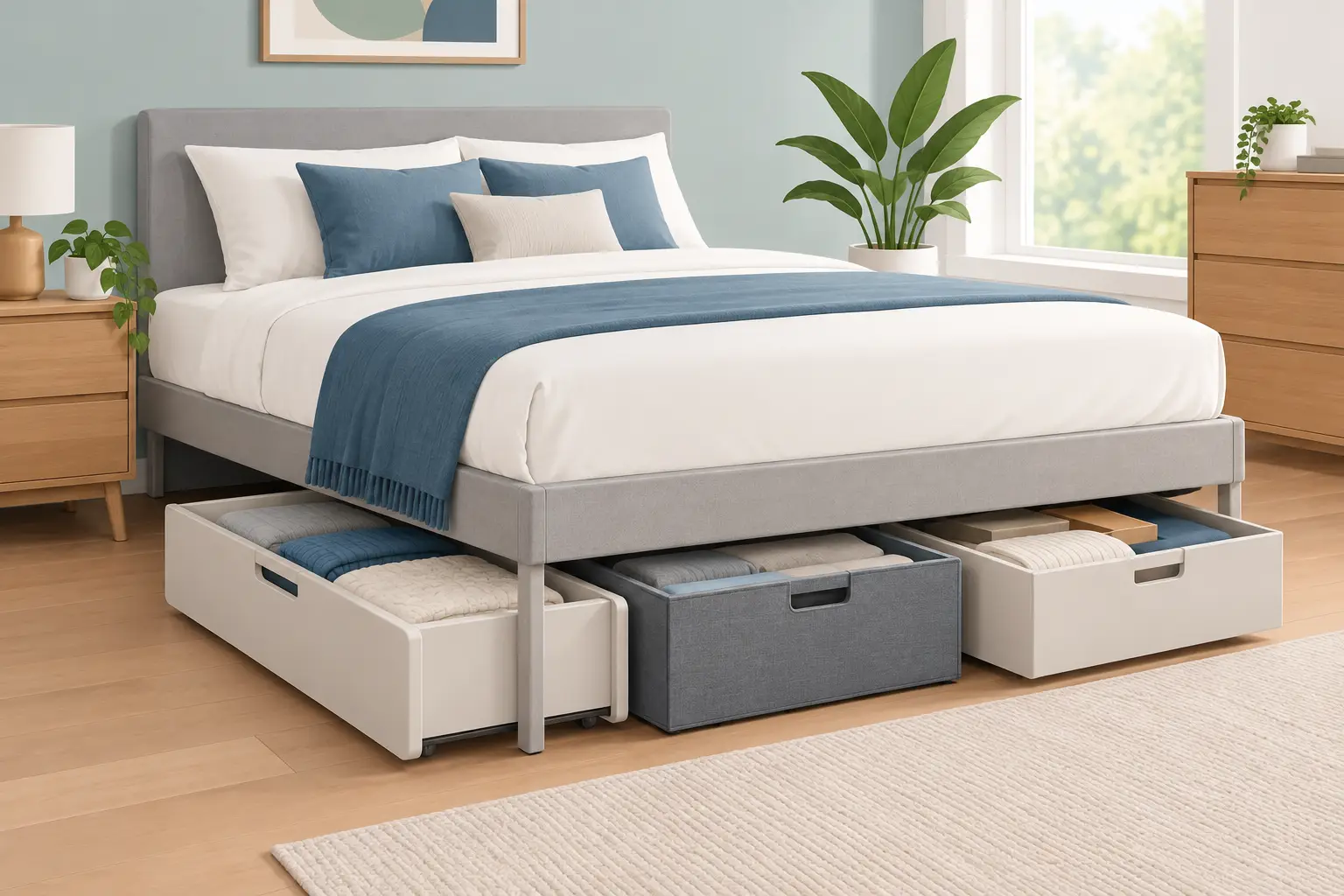
A bed can take up the largest footprint in a bedroom, yet the space beneath it is often wasted or filled with hard-to-reach clutter. Learning how to maximise underbed storage space can free up wardrobes, make a box room feel less crowded and keep everyday items close by without leaving them on display.
The best approach depends on your room, the type of bed you own and what you need to store. A family bedroom may need room for spare bedding and seasonal clothes, while a rental property may benefit from a simple, durable storage bed that gives tenants more usable space from day one.
Choose the right bed base first
If storage is a priority, the bed base matters more than any storage box you place underneath it. A standard bed frame with visible legs can work well for shallow containers, but clearance varies. Measure from the floor to the lowest point of the frame before buying boxes, as wheels, centre support legs and low side rails can reduce the usable area.
For the greatest capacity, an ottoman storage bed is usually the strongest option. The mattress lifts on a gas-assisted mechanism, revealing a full storage compartment beneath the sleeping area. Unlike drawers, the compartment uses almost the entire footprint of the bed, including the centre. It is particularly useful in smaller rooms where there is not enough side clearance to pull drawers out.
Divan beds are another practical choice. They can be ordered with drawers positioned on one or both sides, at the foot end, or in a combination that suits the layout. This can be a sensible option where a bedside table, radiator or wall prevents access on one side of the bed.
Measure before you buy storage boxes
Storage products that are only a few centimetres too tall can become a daily frustration. Measure the internal clearance, but also check the route into the space. A box may fit beneath the bed once flat but still be too tall to slide under its side rail.
Take note of the bed legs and any central supports. Under-bed space is rarely one large, uninterrupted rectangle. Low, wide containers tend to make the best use of the available depth, while soft fabric bags are more forgiving around awkward legs. If your bed has a valance, choose boxes with handles that remain easy to reach without lifting the mattress or shifting the bed.
Also consider the room around the bed. A deep box is not useful if there is no space to pull it fully out. In a tight double bedroom, containers accessed from the foot of the bed may be more convenient than ones placed along the sides.
Maximise underbed storage space with an ottoman bed
Ottoman beds are designed for people who need substantial hidden storage without adding more furniture to the room. A king size ottoman bed, for example, provides a broad storage area for duvets, pillows, luggage, spare linen and out-of-season clothing. The upholstered exterior keeps the room looking finished, while the storage remains out of sight.
There are two common opening styles. End-opening ottoman beds lift from the foot of the bed, which suits bedrooms with clear space at the end. Side-opening designs lift from either the left or right side, making them better for certain layouts. Think about which side you can access comfortably before ordering, particularly if the bed will sit close to a wall.
The trade-off is that you need to lift the mattress to reach the compartment. Gas-lift mechanisms make this manageable, but items used every day, such as work clothes or a child’s favourite toys, may be better kept in a drawer unit or wardrobe. Reserve ottoman storage for bulkier belongings and items you use less often.
Store the right items, not everything
Under-bed storage works best when it has a clear purpose. Treating it as a place for every unwanted item creates the same problem as an overfilled cupboard: you know something is there, but cannot find it when you need it.
Bedding, spare pillows, guest blankets, winter jumpers, holiday clothes and suitcases are natural choices because they are bulky but not required every week. Use breathable fabric bags for textiles where possible, especially if the room can become cold or humid. For clothing, clean and fully dry each item before putting it away. This helps prevent stale smells and avoids trapping moisture in a sealed container.
Avoid storing anything valuable, sensitive to damp, or needed regularly. Important paperwork, electronics and shoes worn every day are usually better kept elsewhere. If you do store shoes beneath the bed, use a structured organiser so they do not become crushed or transfer dirt to linen.
Divide the space into simple zones
A large storage compartment can quickly turn into a jumble without a little structure. There is no need for complicated organising systems. Group similar items together and decide where each category will go before filling the space.
Keep the items you use most often nearest the opening edge. Place heavier bags and less frequently used items towards the back. In an ottoman base, use soft-sided bags or labelled containers that can be lifted out easily rather than stacking loose items too high. This keeps the lifting mechanism clear and makes the compartment easier to manage.
Clear labels save time, particularly in family homes or furnished rental properties. A short label such as “winter bedding”, “guest towels” or “summer clothes” is enough. Labels on the handle-facing side are easiest to read when the box is partly pulled out.
Make use of bed size without overcrowding the room
A larger bed gives more potential storage, but it must still suit the room. It is tempting to choose a king size bed for the capacity alone, yet a bed that leaves too little walkway space can make a bedroom difficult to live with. Measure the room and allow room to open wardrobes, drawers and doors properly.
In a compact bedroom, an ottoman double bed may offer a better balance than adding a larger frame plus several separate storage units. In a larger main bedroom, a king size storage bed can reduce the need for extra chests or bulky blanket boxes. The right choice is not always the bed with the most litres of storage – it is the one that leaves the room practical to use.
For landlords and property buyers furnishing several rooms, choosing repeatable divan or ottoman designs can also make replacement and maintenance simpler. A consistent bed format creates useful storage in each bedroom without relying on extra furniture that may not fit every layout.
Keep the area clean and dry
The space under a bed collects dust, especially around open bed frames. Pull containers out every few months, vacuum the floor and check that nothing has been pushed against a radiator or trapped around bed legs. This is also a good time to review what you have stored and remove items you no longer need.
If condensation is an issue in the room, do not pack storage containers tightly against a damp external wall. Good ventilation and a suitable mattress base help create a more comfortable bedroom overall. Storage should support a tidy room, not block airflow or encourage damp fabric to sit unnoticed.
Match storage to your daily routine
The most effective storage solution is one you will actually use. If you regularly change bedding, a divan drawer may be more convenient than lifting an ottoman base. If your bedroom has very limited floor space, the full compartment of an ottoman bed can be worth the extra lift. If you already own a raised bed frame, low boxes and fabric bags can improve what you have without replacing the bed.
AAA Furniture UK Ltd offers storage-focused bed choices for households that want a smart upholstered look alongside practical capacity. Whether you are furnishing a first home, updating a family bedroom or preparing a rental property, choose a bed and storage format that works with the room rather than against it.
A clear floor, an accessible wardrobe and a bed base used properly can make even a modest bedroom feel calmer. Start by measuring the space you already have, then give every stored item a reason to be there.