

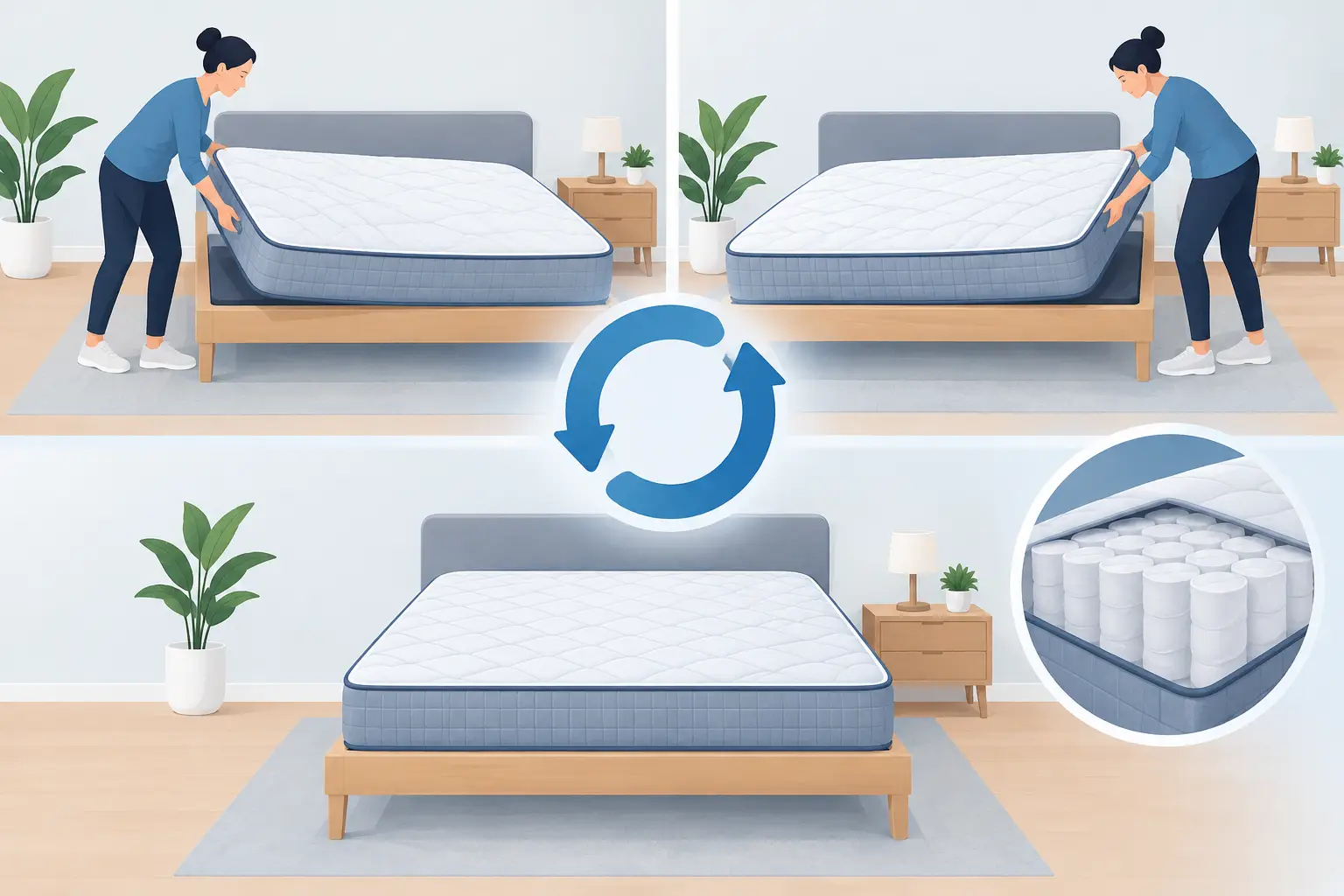
A mattress can still look clean and feel comfortable while quietly developing body impressions in the same two sleeping spots. Regular rotation spreads everyday pressure more evenly, helping your pocket sprung mattress retain a more balanced feel for longer. If you are searching for how to rotate pocket mattress care into your normal bedroom routine, the good news is that it is simple, takes only a few minutes with help, and does not require any specialist tools.
How to rotate a pocket mattress
Rotating means turning the mattress through 180 degrees so the end that was at the headboard moves to the foot of the bed. You are not turning it over. This simple change means your shoulders and hips do not repeatedly rest on exactly the same area of the mattress.
For most pocket sprung mattresses, rotate it from head to toe every three months. A new mattress may benefit from more frequent rotation during its first six months, particularly if it is used every night or by two people of noticeably different weights. Once it has settled, a quarterly routine is normally enough.
Put a reminder in your phone at the start of each season. Rotating your mattress when the clocks change, for example, gives you an easy prompt that is unlikely to be forgotten.
Check whether your mattress should be flipped first
Do not assume that a pocket sprung mattress needs to be turned over. Many modern pocket mattresses are single-sided, with layers of comfort foam, fillings or a quilted sleeping surface designed to stay on top. Flipping one of these can leave you sleeping on the firmer base side and may affect comfort.
Look for a care label sewn into the mattress border, information supplied with your order, or clear differences between the top and bottom surfaces. A hand-tufted mattress may be double-sided, while a pillow-top or memory foam-topped design is commonly single-sided. The product instructions always take priority over a general rule.
If your mattress is double-sided, it may need both rotation and flipping. In that case, follow the recommended schedule from the manufacturer. A common approach is to rotate it head to toe, then on the next scheduled care date flip and rotate it. This prevents one side and one end receiving all the wear.
A safe way to rotate your mattress
Pocket sprung mattresses can be heavier than expected, especially in king size and super king size. The individual springs, deep fillings and reinforced edges all add weight. If the mattress is large or awkward to move, ask another adult to help rather than pulling it across the bed alone.
Start by removing bedding, mattress protectors and any decorative cushions. This is a useful chance to air the mattress for a short period and check for marks, loose stitching or damage. Open a window if practical, but avoid leaving the mattress in direct strong sunlight for prolonged periods, as this can affect some fabrics and fillings.
Next, move bedside furniture or lamps that could be knocked during the turn. Hold the mattress by its side handles if it has them, but use these handles for positioning rather than carrying the full weight. They are not designed to support a heavy mattress over a long distance.
With one person at each side, lift the mattress slightly clear of the bed base and pivot it 180 degrees. Place it down gently, checking that all edges sit evenly within the frame. On a divan base, make sure the mattress is centred and not hanging over one side. On an upholstered frame or ottoman bed, check that it does not catch on the headboard, footboard or lifting mechanism.
Finish by fitting a clean mattress protector and making the bed as usual. A good protector helps reduce the build-up of moisture, dust and everyday spills, which is particularly useful in family homes and rental properties where a mattress needs to work hard for years.
Why rotation matters for pocket springs
A pocket sprung mattress contains individual springs housed in separate fabric pockets. Because each spring responds independently, pocket mattresses are valued for targeted support and reduced movement transfer between sleepers. This construction supports the body well, but it does not make the mattress immune to regular wear.
Your body puts most pressure around the hips, shoulders and lower back. When those areas rest in the same place every night, the comfort layers can settle more quickly there. Rotation does not stop natural settling altogether, but it helps distribute it across a wider area.
This matters even more if one side of the bed is used more often, such as in a guest room where people tend to favour one side, or in a rental property with frequent changes of occupant. Rotating the mattress keeps use more even and can help the bed continue to look neat as well as feel supportive.
It is worth being realistic about what rotation can and cannot do. It will not repair broken springs, deep sagging, water damage or an unsuitable bed base. If the mattress has a substantial dip that does not recover after being left unused, or you wake with new discomfort despite good bed support, it may be time to inspect the mattress more closely.
Match the mattress to the right base
Even the best rotation routine cannot compensate for a poor foundation. A pocket sprung mattress should sit on a suitable, level base that supports it evenly. Divan bases are a popular option because they provide a solid platform and can include useful drawer or ottoman storage beneath the mattress.
If you use a slatted bed frame, check that the slats are secure, evenly spaced and not bowed or broken. Wide gaps may allow the mattress to dip between slats, putting unnecessary pressure on springs and fillings. The centre rail and any supporting legs should also be firm on the floor.
For ottoman storage beds, avoid storing items so high that they press against the underside of the mattress when the bed is closed. Keep the lifting mechanism clear, and always lower it carefully after moving the mattress back into position.
How often should you rotate it?
The right schedule depends on how the mattress is used. A mattress in a main bedroom usually benefits from rotation every three months. For the first few months after purchase, rotating monthly can be sensible where the mattress is particularly deep, heavily upholstered or used by two adults every night.
A spare-room mattress may only need rotating twice a year if it receives light use. By contrast, a child or teenager’s mattress can need regular checks because growing bodies, jumping on the bed and changing sleep habits can all create uneven wear. Landlords and housing providers may find it helpful to include mattress checks between tenancies, alongside a general inspection of the bed base.
There is no benefit in rotating it every week. Too much handling can be inconvenient and increases the chance of strained backs, damaged handles or scuffed bed frames. A sensible, consistent schedule is better than overdoing it.
Signs your mattress needs attention
Small body impressions in the surface can be normal, especially in plush comfort layers. What matters is whether the mattress still offers level support once you lie on it. If you notice persistent hollows, noisy or protruding springs, a lopsided edge, or a clear change in comfort, inspect the mattress and base together.
Also check your bedroom environment. Regularly airing the room, using a protector and avoiding sitting on the same mattress edge for long periods can all support better mattress care. Never bend a pocket sprung mattress sharply to get it through a tight stairwell or doorway, as this can damage the internal spring units.
A pocket sprung mattress is a practical investment in better sleep, and a small amount of routine care helps protect it. Rotate it on schedule, follow its specific care label, and make sure it rests on a supportive base – then you can enjoy a more comfortable, even-feeling bed for longer.