

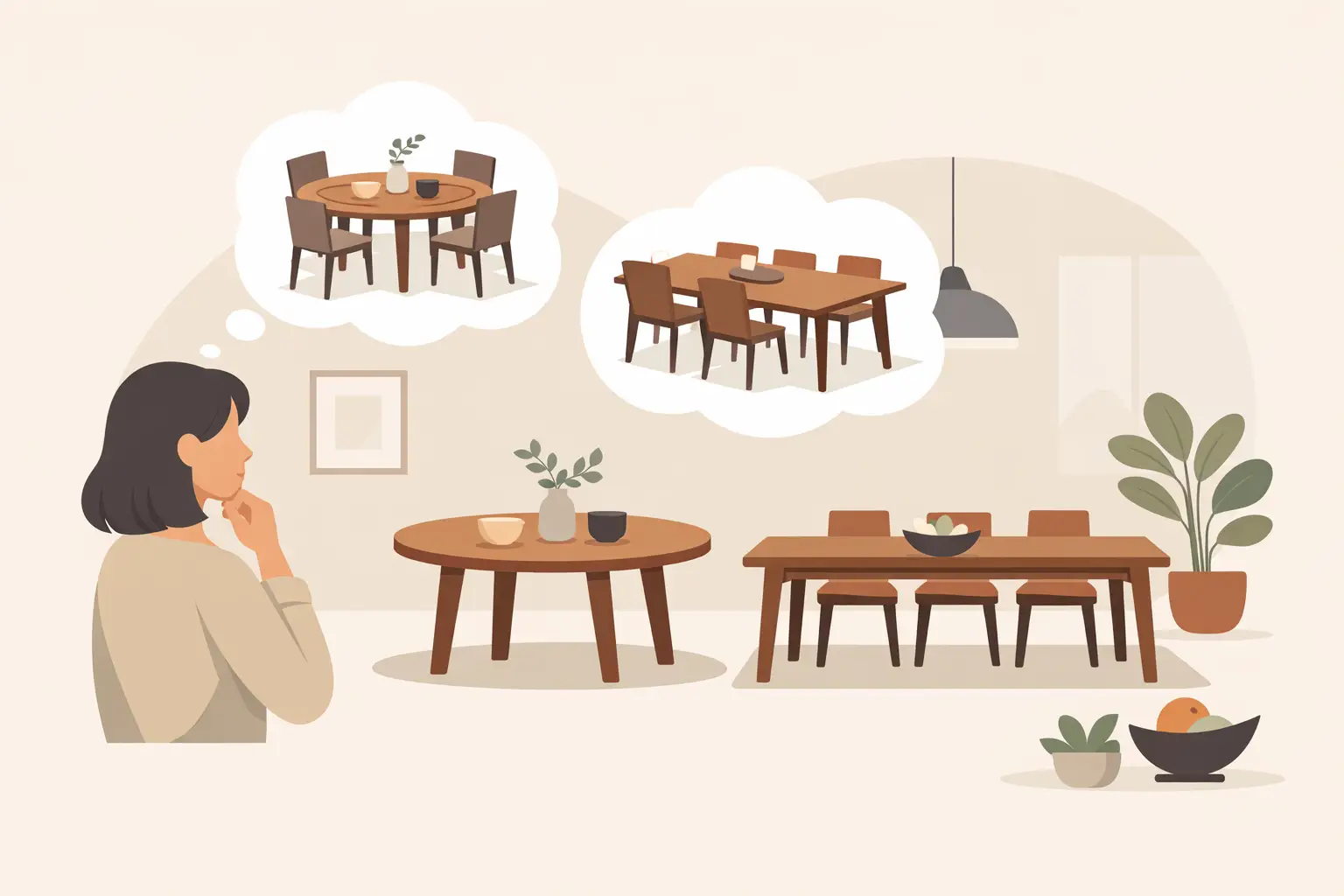
A dining table needs to do more than look good in a product photo. It has to fit the room, allow people to move around it comfortably and suit the way your household actually eats, works and entertains. The search for “how to choose dining table” advice often starts with style, but size and everyday use should come first.
For many homes, the dining table is one of the hardest-working pieces of furniture. It may be used for weekday meals, children’s homework, a laptop during the day and family visits at the weekend. Choosing the right one means balancing available space, seating capacity, material, shape and budget without buying a table that makes the room feel cramped.
How to Choose a Dining Table That Fits the Room
Before comparing finishes or chair styles, measure the area where the table will sit. Measure the length and width of the room, then note doors, radiators, kitchen units, windows and any furniture that needs to stay in place. A table can technically fit into a room and still be impractical if nobody can pull out a chair or walk past it.
As a useful starting point, aim to leave around 90cm between the edge of the table and a wall, cabinet or other large furniture. This gives space for a person to sit down and for others to pass behind them. In a compact kitchen-diner or flat, you may need to work with less, but check that chairs can still be moved without blocking the main route through the room.
Also consider the table when it is in use, not just when it is empty. Dining chairs add depth, and seats with arms, thick upholstery or a reclining design need more room than a simple wooden chair. If you are replacing an existing table, mark the proposed new size on the floor with masking tape or newspaper. It is a straightforward way to see whether the footprint feels right before you order.
Allow Enough Space Per Person
Each diner needs roughly 60cm of table width for a comfortable place setting. This allows room for plates, cutlery and elbows without everyone feeling squeezed together. A 120cm rectangular table generally seats four people comfortably, while a 150cm to 180cm table can often seat six, depending on its leg position and the width of the chairs.
The base matters as much as the top. Tables with legs at each corner can limit where chairs fit, particularly at the ends. A pedestal or central base can make seating more flexible, although the base itself must leave enough leg room underneath. Check the full product dimensions rather than relying on a description such as “four-seater” or “six-seater”.
Pick the Right Table Shape
The best shape depends on the room layout and the number of people you expect to seat most often. Rectangular dining tables are the most familiar choice and make good use of longer rooms. They work especially well in open-plan dining areas and can give families plenty of surface space for daily use.
A round dining table is often a sensible choice for a smaller square room. With no corners to navigate, it can make a tight area easier to move around. Everyone faces towards the centre, which also makes conversation feel more relaxed. The trade-off is that a round table can take up more floor area than expected once chairs are pulled out, and very large round tables make it harder to reach shared dishes.
Oval tables provide some of the same benefits as a round design while offering a longer surface. They soften a narrow room and are useful where sharp corners would get in the way. Square tables suit square rooms and smaller households, but a large square design can leave diners sitting further apart than they would at a rectangle or round table.
If your needs change regularly, an extending dining table is worth considering. It keeps the room easier to manage day to day but gives you extra seating for Sunday lunch, birthdays or guests. Check how the extension works and where the leaf is stored. A table is only practical if you can extend it without moving half the room.
Choose a Material for Everyday Life
The right dining table material is not simply a question of appearance. Think about who will use it, how much cleaning it will need and whether you are comfortable with signs of wear developing over time.
Wood and wood-effect tables bring warmth and suit both traditional and modern interiors. A solid wood table can be long-lasting and may be refinished in some cases, but it needs protection from standing water, hot pans and harsh cleaning products. Veneer and engineered wood options can offer an attractive look at a more affordable price, though they may be less forgiving if the surface is deeply scratched or damaged.
Glass dining tables can make a smaller dining area feel lighter because they do not visually block the room. They are easy to wipe after meals, but fingerprints, dust and smears are more visible. For busy family homes, toughened glass is the sensible option, yet it will still need regular cleaning to keep its polished appearance.
Marble-effect, ceramic and stone-look tops create a more formal finish and are popular in contemporary dining spaces. They can be practical for wiping down, but weight is a consideration. Make sure the floor is suitable and that delivery access, including stairs and narrow hallways, has been considered before purchase.
For rental homes and households managing a tighter budget, choose a finish that is easy to live with rather than one that requires constant care. A mid-tone wood effect or textured surface can hide everyday marks better than very glossy black, bright white or clear glass.
Match Chairs to Comfort and Use
A dining set can make buying simpler because the table and chairs are designed to work together. This is helpful when you want a coordinated look without spending time checking seat heights, colours and proportions separately. However, buying a table and chairs individually gives you more freedom where space or comfort is the priority.
Check the height between the chair seat and the underside of the table. Most dining tables are around 75cm high, and there should be enough clearance for thighs and armrests. Dining chairs are usually comfortable with a seat height around 45cm, but always compare the actual measurements.
Upholstered dining chairs can make longer meals more comfortable and add a softer finish to a dining room. They are particularly appealing in a home where the table is used for work or extended family meals. The compromise is upkeep, especially around young children, pets or frequent spills. Faux leather is generally easier to wipe clean, while fabric can feel warmer and more relaxed but may benefit from stain protection.
Avoid filling every possible inch of the table with chairs. A dining area feels more welcoming when people can sit down without bumping into each other, and leaving one or two spare positions can be more useful than forcing in an extra seat that nobody wants to use.
Consider Your Layout Beyond the Table
A dining table should work with the rest of the room rather than compete with it. If you need storage for placemats, serving dishes or glassware, a sideboard or display cabinet may be more useful than choosing an oversized table. In a combined living and dining room, matching the table finish with nearby furniture can make the space feel more organised, even when the pieces are not part of the same collection.
Think about lighting too. A pendant light centred over the table can define the dining zone, but it should suit the table’s final position. If you are planning to use an extending table, make sure the light still looks balanced when the table is fully open.
For landlords and furnished rental properties, simple shapes, durable finishes and easy-clean chairs are usually the most practical choice. Neutral colours make it easier for future tenants to add their own accessories, while a standard four- or six-seat table is more versatile than a highly decorative design.
Set a Budget That Includes the Full Purchase
When comparing prices, look at the complete cost of creating a usable dining area. This may include chairs, delivery, assembly and any floor protection you need for hard flooring. A lower-priced table may not represent the best value if suitable chairs or delivery costs add significantly to the total.
It is often worth spending a little more on the features you will use every day, such as an extension mechanism, a durable top or comfortable seating. On the other hand, a large designer table is not good value if it leaves no space to move through the room. Affordable furniture should still feel considered, practical and suitable for the life you lead.
Measure carefully, choose for your usual number of diners and leave room for real life around the table. The right dining table will make meals easier, guests more comfortable and the whole room more useful from the day it arrives.