

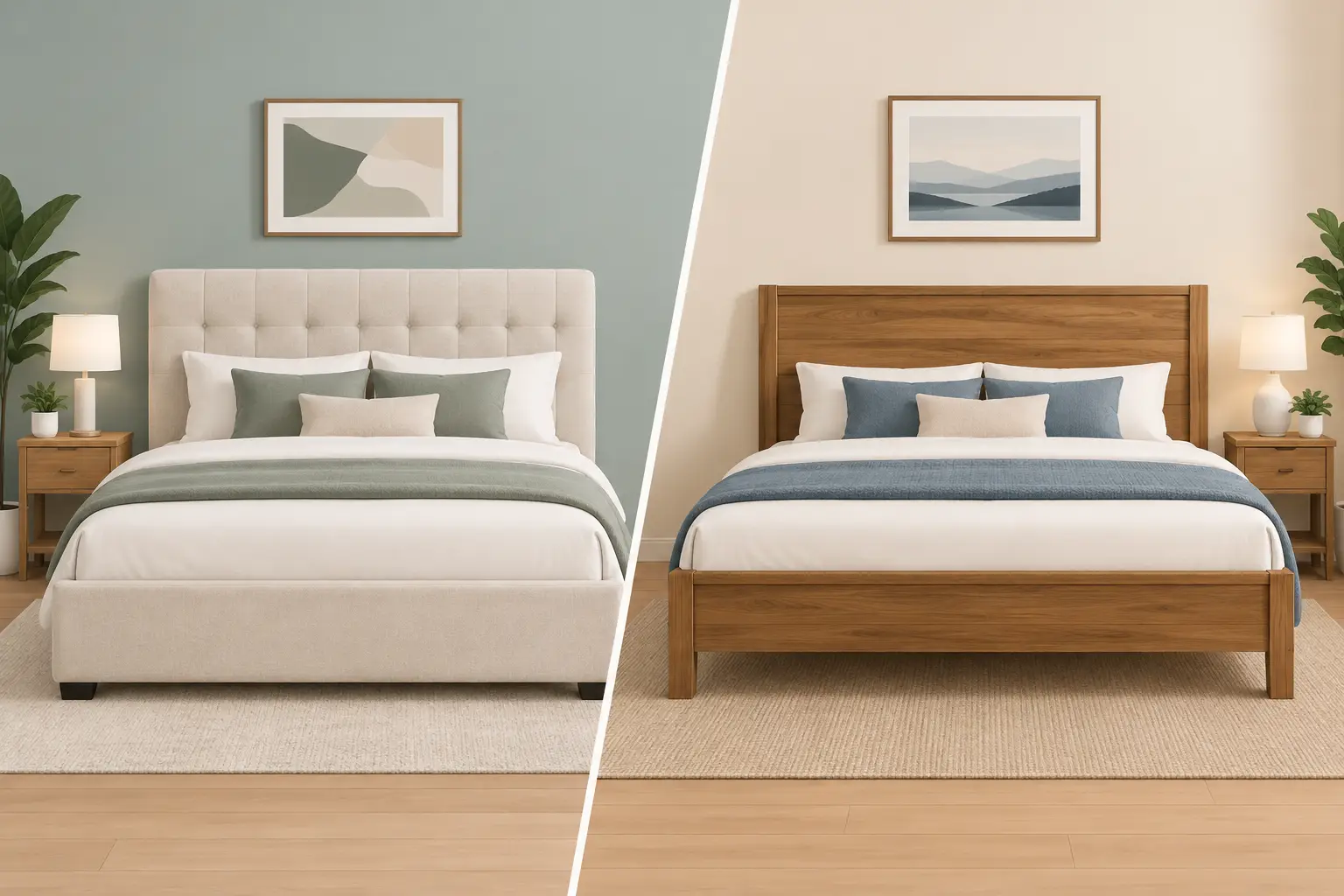
A bed frame changes more than the look of a bedroom. It affects how comfortable the room feels when you sit up with a book, how easily you can clean around it, and whether you can make better use of limited floor space. When comparing upholstered versus wooden bed frames, the right choice usually comes down to your room, routine and budget rather than one material being better in every situation.
For many UK homes, an upholstered bed offers a softer, more finished look and can be paired with useful storage. A wooden frame brings a cleaner, more traditional structure that suits rooms where durability and easy maintenance are the priority. Here is what to consider before choosing.
Upholstered versus wooden bed frames: the main difference
An upholstered bed frame is built around a solid base and covered in fabric, velvet, faux leather or another padded finish. The headboard is often the standout feature, with options ranging from simple panel designs to winged, buttoned or sleigh-style shapes. It is a practical choice for anyone who likes sitting up in bed, as the padded headboard is more comfortable than leaning against bare wood.
A wooden bed frame has a visible timber or wood-effect structure, usually with a slatted base, headboard and footboard. Its appeal is in the material itself: natural grain, painted finishes and simple lines can work well in traditional, country, Scandi and contemporary bedrooms. Wooden frames can feel less bulky visually, particularly when they have open space beneath the bed.
Neither option is automatically the more expensive or longer-lasting one. Build quality, the strength of the base, the fabric or wood finish, and how the bed is used all matter more than the headline material.
Comfort and everyday use
Why upholstered beds suit relaxed bedrooms
The padded headboard is one of the strongest reasons to choose an upholstered frame. It gives you a comfortable surface for reading, watching television or using a laptop in bed. In a main bedroom where the bed is used for more than sleeping, this can make a noticeable difference.
Fabric also softens a room. If your bedroom has hard flooring, plain walls and fitted furniture, an upholstered headboard can stop it feeling overly stark. Neutral grey, cream and beige fabrics are easy to coordinate with changing bedding, while darker shades can create a more dramatic focal point.
For households with young children, the softer edges of an upholstered frame may also be appealing. That said, fabric needs care. If drinks, make-up, pet hair or muddy paws are likely to be regular visitors, choose a practical, easy-clean finish and avoid very pale upholstery unless you are happy to maintain it.
Why wooden frames remain a dependable choice
Wooden beds are straightforward and adaptable. A solid, well-made frame can cope well with everyday use, and many people prefer the firmer feel and uncomplicated structure. There is no fabric to mark, flatten or collect dust, making wood especially practical for guest rooms, rental properties and busy family homes.
Wood also works well when you want the rest of the bedroom to do the decorating. Patterned bedding, colourful walls or a statement rug can sit comfortably alongside a simple oak, pine, white or grey frame. If you redecorate often, a classic wooden bed may be easier to keep than a fabric colour chosen for a particular scheme.
Cleaning and maintenance
A wooden frame is generally the easier option to clean. Regular dusting and an occasional wipe with a lightly damp cloth are normally enough. Check the manufacturer’s care guidance, particularly for painted, veneered or lacquered finishes, and avoid harsh cleaners that could dull the surface.
Upholstered frames need a little more attention, but they are not difficult to live with. Vacuum the fabric using a soft brush attachment to remove dust and hair from seams, buttons and the headboard. Deal with spills promptly by blotting rather than rubbing, then use a fabric cleaner only if it is suitable for the material. Velvets and textured fabrics can look particularly smart, but their pile may show marks or changes in shading more readily than a flat weave.
If allergies are a major concern, the decision depends on your cleaning routine. Wood offers fewer places for dust to settle, while an upholstered bed can still be a good choice when vacuumed regularly. A mattress protector and washable bedding will make a far bigger difference to day-to-day freshness than the bed frame alone.
Storage can decide the purchase
In smaller bedrooms, the most useful comparison is often not fabric versus wood but storage versus no storage. A standard wooden frame with clearance underneath can provide room for storage boxes, although they may remain visible and can collect dust. It can be an affordable way to use spare space, especially in a box room or rented flat.
An upholstered ottoman bed offers a neater solution. The mattress lifts to reveal a large concealed storage area across the full base, ideal for spare bedding, seasonal clothes, towels or items that would otherwise fill a wardrobe. Side-lift and end-lift opening options can help you choose a design that works with the room layout.
Divan beds are another strong option for practical storage, with drawers built into the base. They may not provide the statement headboard of a large upholstered frame unless you add one, but they are excellent for compact rooms where every drawer matters.
Before ordering any storage bed, measure the space around it. You need enough clearance to raise an ottoman mattress safely or pull out drawers fully. Also consider the mattress weight. A good lifting mechanism makes opening manageable, but a very heavy mattress will still take more effort.
Style, size and proportion
An upholstered bed tends to look larger because the headboard is often deep and padded. This is ideal for making a larger bedroom feel finished, but a tall winged design can overwhelm a small room with a low ceiling. In tighter spaces, choose a slimmer headboard, a lighter fabric and legs that lift the frame slightly from the floor.
Wooden beds can suit compact rooms because their outlines are often cleaner. However, a chunky sleigh frame or a high footboard can still take up valuable visual and physical space. Check the full external measurements, not just the mattress size. A king size mattress measures 150 cm by 200 cm, but the frame around it may add considerably more width and length.
For a coordinated look, match the bed to the tone of your existing furniture rather than trying to copy every finish exactly. A grey upholstered bed can sit well with white or oak bedroom furniture. A natural wooden frame can be softened with upholstered bedside stools, layered cushions and curtains. A room looks more considered when the colours relate, even if the materials are mixed.
Budget and long-term value
The best value bed frame is one that suits the way you live for several years. A low-priced option that lacks storage, feels uncomfortable to sit against or does not fit your bedroom may cost more in the long run when you need to replace it sooner.
Upholstered beds vary widely in price because fabric, headboard design, base type and storage mechanism all affect the cost. A simple fabric frame can be a budget-friendly update, while an ottoman or sleigh bed is often a higher investment because it combines style with more components and storage capacity.
Wooden frames can also range from entry-level pine designs to heavier hardwood constructions. Look beyond the photographs and check the slat type, centre support, fittings and weight guidance. A frame with reliable support helps your mattress perform properly and reduces the chance of squeaks or movement over time.
For landlords and trade buyers, consistency is often as valuable as appearance. A durable, easy-clean wooden frame may suit a rental portfolio, while upholstered storage beds can add appeal in furnished homes where tenants need built-in bedroom storage. The best choice depends on the property standard, expected turnover and maintenance plan.
Which bed frame should you choose?
Choose an upholstered bed frame if comfort, a padded headboard and a polished bedroom look are high on your list. It is particularly worthwhile if you want an ottoman base to replace bulky storage boxes or free up wardrobe space. Choose a wooden frame if you prefer low-maintenance furniture, a timeless material and a lighter-looking bed that can adapt as your décor changes.
It also helps to think about the mattress you plan to use. A supportive mattress and a sound bed base should work together, whether the frame is fabric-covered or wooden. Check that your chosen mattress size matches the frame exactly, and make sure the room allows enough space to walk around the bed and open nearby wardrobes or drawers.
AAA Furniture UK Ltd offers a range of upholstered beds, ottoman storage beds, divans and bedroom furniture to help shoppers build a practical, coordinated room without buying from several places. Start with the storage and size your bedroom needs, then choose the material and style that you will be pleased to see every morning.