

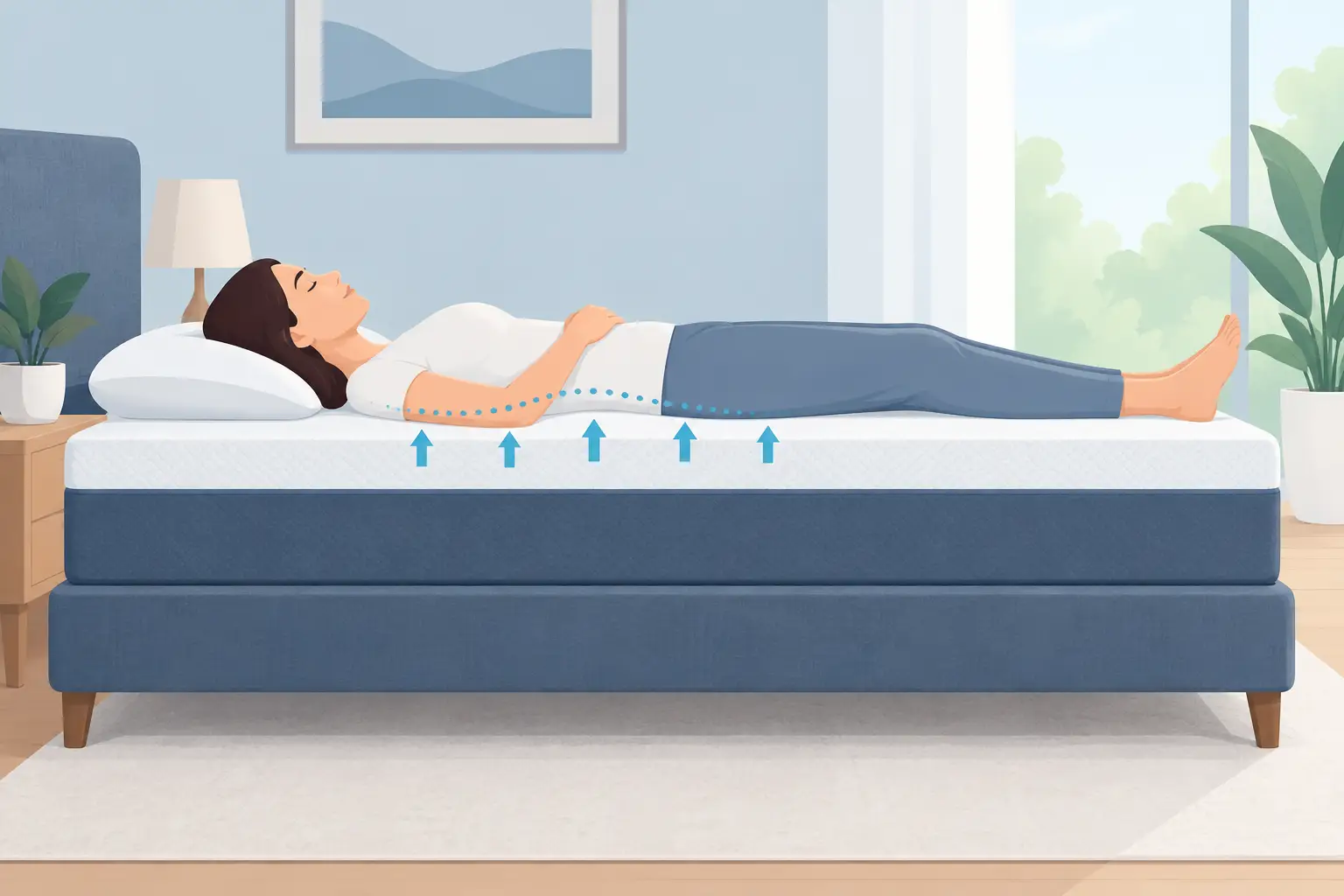
A mattress that feels pleasantly soft for five minutes in a showroom can feel very different after a full night on your back. Back sleeper mattresses need to keep your hips from dropping too far while giving your shoulders, lower back and heels enough cushioning to rest comfortably. The right choice is not simply the firmest mattress available. It is the one that holds your body in a level, supported position without creating pressure points.
For many UK households, a new mattress is also part of a wider bedroom upgrade. Whether you are replacing a worn mattress, furnishing a first home or fitting out a practical rental property, it pays to choose support and size first, then consider fabrics, storage beds and bedroom furniture around it.
What back sleepers need from a mattress
When you sleep on your back, most of your body weight is distributed across a broader surface than when you sleep on your side. Your mattress should support the natural curve around the lower back, rather than leaving a large gap beneath it or allowing the pelvis to sink lower than the chest.
A mattress that is too soft can let the hips dip. This may place strain on the lower back and leave you feeling stiff when you get up. One that is too firm may push against the shoulders, sacrum and heels, making it harder to settle and causing you to change position repeatedly through the night.
Medium to medium-firm comfort is often a sensible starting point for back sleepers. It offers a balanced feel for many adults, particularly when paired with a supportive base. However, body weight, preferred sleeping position and personal comfort all matter. A lighter person may find a medium mattress supportive enough, while a heavier person may prefer the steadier feel of medium-firm or firm support.
Choosing firmness for back sleeper mattresses
Firmness labels are useful, but they are not identical across every manufacturer. A medium mattress from one range can feel firmer or softer than a medium mattress from another, depending on its fillings, spring system and depth. Think of firmness as a guide, then look at how the mattress is built.
Medium comfort
Medium comfort suits back sleepers who prefer a little more cushioning and do not need an especially firm surface. It can work well for lighter adults and for people who alternate between their back and side during the night. Look for enough support beneath the comfort layer so your hips remain level rather than settling into the mattress.
Medium-firm comfort
Medium-firm is a popular choice for couples and a practical all-round option. It provides more resistance under the lower back and hips while still feeling comfortable at the shoulders. If your current mattress feels saggy, or you regularly wake with a stiff lower back, moving towards medium-firm may be worth considering.
Firm comfort
A firm mattress can suit heavier back sleepers or those who simply prefer a flatter, more stable sleep surface. Firm does not have to mean hard. Quality fillings can still add comfort on top, but the core should resist excessive sinking. If you are slim, sleep partly on your side or are sensitive around your shoulders, a very firm mattress may feel unforgiving.
Spring, memory foam or hybrid?
The materials inside a mattress shape how it responds to your body, how warm it feels and how much movement you notice from the other side of the bed.
Open coil mattresses are often a value-led choice. Their connected spring system offers consistent support across the surface and can be suitable for guest rooms, children’s bedrooms and rental properties where affordability matters. Choose a good depth and sensible firmness level, as thinner budget mattresses may not provide the comfort needed for everyday adult use.
Pocket sprung mattresses use individual springs that move more independently. This can give more targeted support around the hips and lower back, while also reducing the feeling of a partner moving in the night. A pocket sprung mattress is a strong choice for couples who share a bed and have different body weights or sleep habits.
Memory foam moulds more closely to the body and can reduce pressure around prominent areas. For back sleepers, it is best when the foam is combined with a supportive base layer or springs. Very soft, deep memory foam may allow some sleepers to sink too far, and some people find traditional foam retains more warmth than they would like.
Hybrid mattresses combine springs with foam or other comfort layers. They are useful if you want the responsive support of springs with a more cushioned top. As with any mattress, check the stated comfort level rather than assuming a hybrid will automatically be medium-firm.
Your body weight and sleeping habits matter
There is no single best mattress for every back sleeper. A mattress should react to the load placed on it. Someone of lighter build may barely compress a firm mattress, meaning it can feel hard and leave the lower back unsupported. A heavier sleeper may compress a soft model too deeply and need a stronger spring unit or denser fillings.
Consider how you actually sleep, not just how you fall asleep. If you spend most of the night on your back, prioritise even support through the centre of the mattress. If you often move onto your side, avoid choosing a mattress so firm that it puts pressure on your shoulder. Couples may find medium-firm pocket springs the most straightforward compromise, especially on a king size or super king size bed where each person has more space.
Match the mattress to the right bed base
A good mattress needs a suitable base. An old, damaged or uneven base can affect comfort and shorten the usable life of a new mattress. Divan beds provide a flat, supportive foundation and are a practical option for bedrooms where storage is needed. Drawer divans and ottoman storage beds can help keep bedding, seasonal clothes and spare cushions out of sight without taking up extra floor space.
If you choose an upholstered bed frame, check that its slats are secure and evenly spaced. A sprung slatted base can add a little give, while a solid platform offers a firmer feel. This means the same mattress may feel slightly different depending on the bed underneath it.
Measure the room before selecting a larger size. A king size bed gives more room for two people, but it should not make it difficult to open wardrobe doors, drawers or an ottoman mechanism. In compact bedrooms, a double divan with built-in storage may offer the best balance of sleeping space and day-to-day practicality.
Signs it is time to replace your mattress
A mattress does not need to be visibly collapsed before it stops doing its job. Persistent morning aches, noticeable dipping, lumps, noisy springs or the feeling that you roll towards the centre are all signs that support may be fading. If you sleep better away from home than in your own bed, your mattress could be part of the reason.
Turning or rotating the mattress may help where the manufacturer recommends it, but it will not restore worn fillings or broken springs. Many modern mattresses are designed to be rotated rather than flipped, particularly those with a one-sided comfort layer. Following the care guidance and using a mattress protector can help keep it fresher and protect your investment.
Buying with comfort and value in mind
Start with the size of your bed, the level of firmness you are likely to need and the amount you want to spend. Then compare mattress depth, spring type, fillings and whether the model is intended for regular use. The cheapest option is not always the best value if it needs replacing quickly, but a higher price does not guarantee it will suit your body either.
For a shared bedroom, consider the whole setup. A supportive mattress, a correctly sized bed base and enough room to move around the bed will make a bigger difference than choosing a fashionable headboard alone. AAA Furniture UK Ltd offers beds and mattresses alongside practical bedroom storage, making it easier to plan a coordinated room without arranging furniture from several suppliers.
If you are unsure between two firmness levels, lean towards the option that supports your hips while still allowing your lower back to rest naturally. A mattress should feel supportive from the first night, not like something you have to tolerate. Give yourself the space to choose carefully, and your bed can become the most dependable part of a well-organised bedroom.